 EN
EN

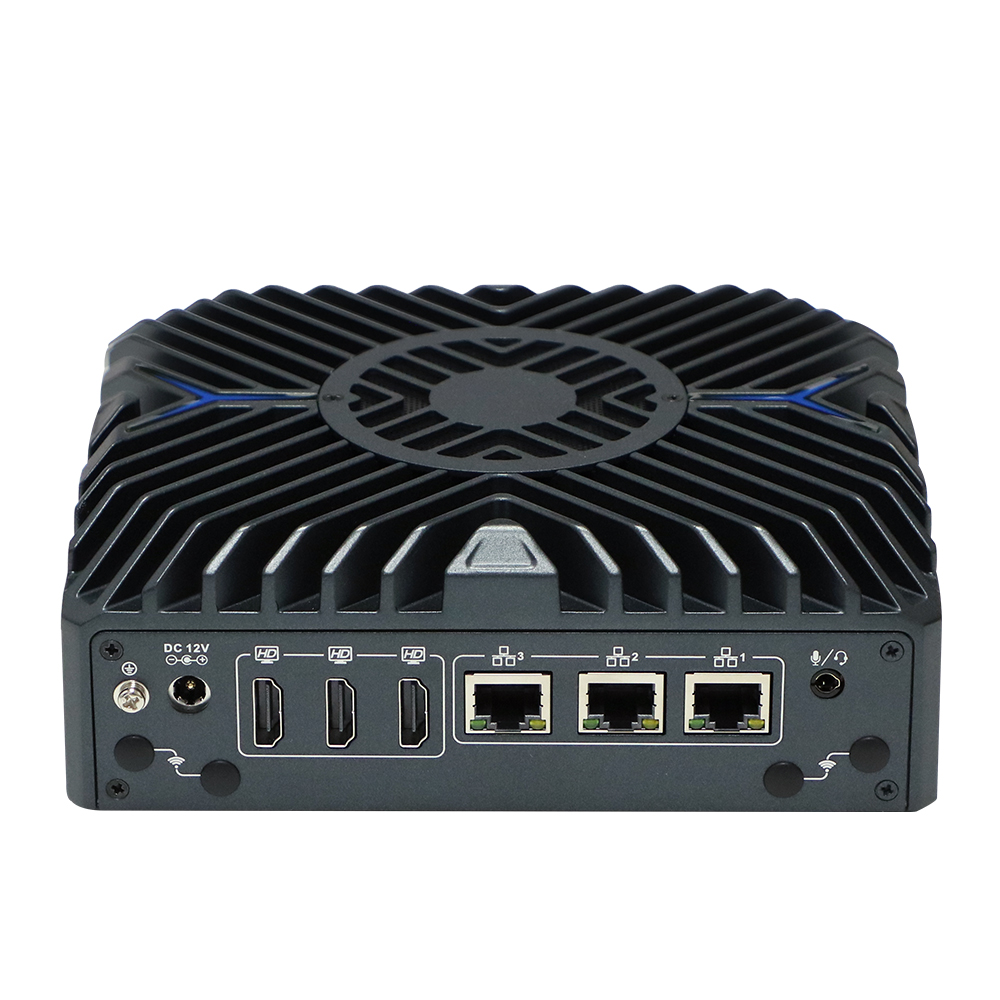
Why Rugged Mini PCs Are Essential for Industrial Edge Applications
Real-Time Processing Demands in Harsh Environments
Industrial edge applications require instantaneous data processing to control machinery, monitor sensors, and prevent costly failures. In harsh environments—factories, oil fields, remote utilities—electronics face dust, moisture, extreme temperatures (−40°C to 85°C), and constant vibration. Standard systems often fail under these conditions, triggering unplanned downtime. Industrial operations lose an average of $260,000 per hour during outages (Industry Report 2023). Rugged mini PCs meet this challenge with fanless thermal designs that eliminate dust-clogged fans, conformal coating for moisture and chemical resistance, and shock-absorbent enclosures. This engineered resilience ensures uninterrupted real-time performance—from predictive maintenance alerts to safety-critical responses—without latency or compromise.
The Convergence of Ruggedization, Compact Form Factor, and Edge Intelligence
Rugged mini PCs uniquely combine three mission-critical attributes: industrial-grade durability, space-efficient packaging, and on-device AI processing capability. Their compact size enables deployment in tight, inaccessible locations—control cabinets, robotic arms, or mobile platforms—while embedded neural processing units (NPUs) support real-time inference tasks like defect detection, energy optimization, and anomaly recognition directly at the edge. By minimizing dependence on cloud connectivity, they reduce bandwidth demand and decision latency, enhancing security and responsiveness. This integration powers faster, more reliable automation in smart factories, autonomous material handling systems, and distributed infrastructure—where reliability, size, and intelligence must coexist.
Core Engineering Features That Define True Rugged Mini PCs
IP65–67 Enclosures, Wide-Temperature Operation (−40°C to 85°C), and Conformal Coating
True rugged mini PCs are defined by deliberate, layered hardening—not just marketing claims. IP65–67-rated enclosures deliver full dust protection and resistance to high-pressure water jets, enabling safe operation in washdown-intensive food processing lines or outdoor energy substations. Wide-temperature operation (−40°C to 85°C) ensures functionality in Arctic logistics depots or steel mill environments where ambient swings exceed 125°C. Conformal coating—applied as acrylic or silicone polymer layers—protects PCBs from humidity, condensation, and corrosive chemical exposure. Together, these features form a triple-shield defense system validated for continuous operation in settings where particulate contamination and thermal stress render standard electronics nonviable.
Fanless Design, Shock/Vibration Resistance, and Industrial-Grade Component Selection
Fanless thermal architecture eliminates moving parts, removing a leading cause of failure in dusty or debris-laden environments like grain silos, textile mills, or mining conveyors. Vibration resistance up to 5Grms and shock tolerance exceeding 50G allow secure mounting on heavy machinery, automated guided vehicles (AGVs), and mobile field equipment without performance loss. Critically, component-level ruggedization includes extended-temperature SSDs, MIL-STD-610G compliant connectors, and power supplies rated for 24/7 operation—all contributing to MTBF ratings exceeding 100,000 hours. This disciplined engineering delivers multi-year service life in mission-critical deployments where maintenance access is limited and downtime carries severe operational and financial consequences.
Rugged Mini PCs vs. Standard Mini PCs: Critical Differences for Industrial Automation
While both share basic computing architecture, rugged mini PCs are purpose-built for industrial extremes—conditions that rapidly degrade standard models. Commercial mini PCs typically operate within 0°C to 40°C, lack ingress protection, and use consumer-grade components with MTBFs under 50,000 hours. In contrast, rugged variants sustain operation from −40°C to 85°C, withstand sustained vibration (>5Grms) and mechanical shock (>50G), and feature IP65-sealed enclosures that block conductive dust and moisture. Their fanless design removes a primary failure vector in dirty environments, while conformal coating and industrial-grade SSDs reduce field failure rates by 60% compared to commercial alternatives (Embedded Systems Reliability Study). As a result, rugged units achieve 5+ year lifespans in factory settings—versus 1–2 years for standard PCs—making them the only technically and economically viable choice where uptime directly impacts worker safety, regulatory compliance, and bottom-line profitability.
Enabling Edge AI with Rugged Mini PCs: From Inference to Autonomous Action
NVIDIA Jetson and Intel NPU Integration in Rugged Embedded Platforms
NVIDIA Jetson modules and Intel NPUs transform rugged mini PCs into trusted edge AI platforms—delivering over 1.4 teraflops of inferencing performance at under 15W. Unlike cloud-reliant AI, these accelerators process sensor, vision, and telemetry data locally, eliminating network dependency and decision latency. Crucially, their integration preserves core ruggedness: thermal management remains fanless and wide-temperature rated (−40°C to 85°C), enclosures retain IP65–67 sealing, and mechanical construction sustains shock/vibration certifications. This enables autonomous quality inspection on production lines, real-time thermal anomaly detection in power substations, and AI-driven safety monitoring on offshore rigs—applications where milliseconds matter, connectivity is intermittent, and hardware must perform without degradation for years.
FAQ
What are rugged mini PCs?
Rugged mini PCs are compact computing devices designed to withstand harsh environmental conditions, such as extreme temperatures, dust, moisture, and vibration, while delivering reliable performance for industrial edge applications.
How do rugged mini PCs differ from standard mini PCs?
Rugged mini PCs are built for industrial environments with features like wide-temperature operation (−40°C to 85°C), IP65–67-rated enclosures, fanless designs, and industrial-grade components, whereas standard mini PCs are designed for less demanding conditions and have shorter lifespans.
What industries benefit most from rugged mini PCs?
Industries such as manufacturing, automation, energy, transportation, and logistics benefit significantly due to their need for reliable, durable, and compact computing solutions in challenging environments.
Why is fanless design important in rugged mini PCs?
Fanless designs eliminate moving parts, reducing the risk of failure from dust, debris, or mechanical wear, making them ideal for dirty or vibration-heavy environments.
What role does edge AI play in rugged mini PCs?
Edge AI enables rugged mini PCs to perform real-time data processing and decision-making directly on the device, reducing reliance on cloud connections and enhancing performance in latency-sensitive applications.