 EN
EN

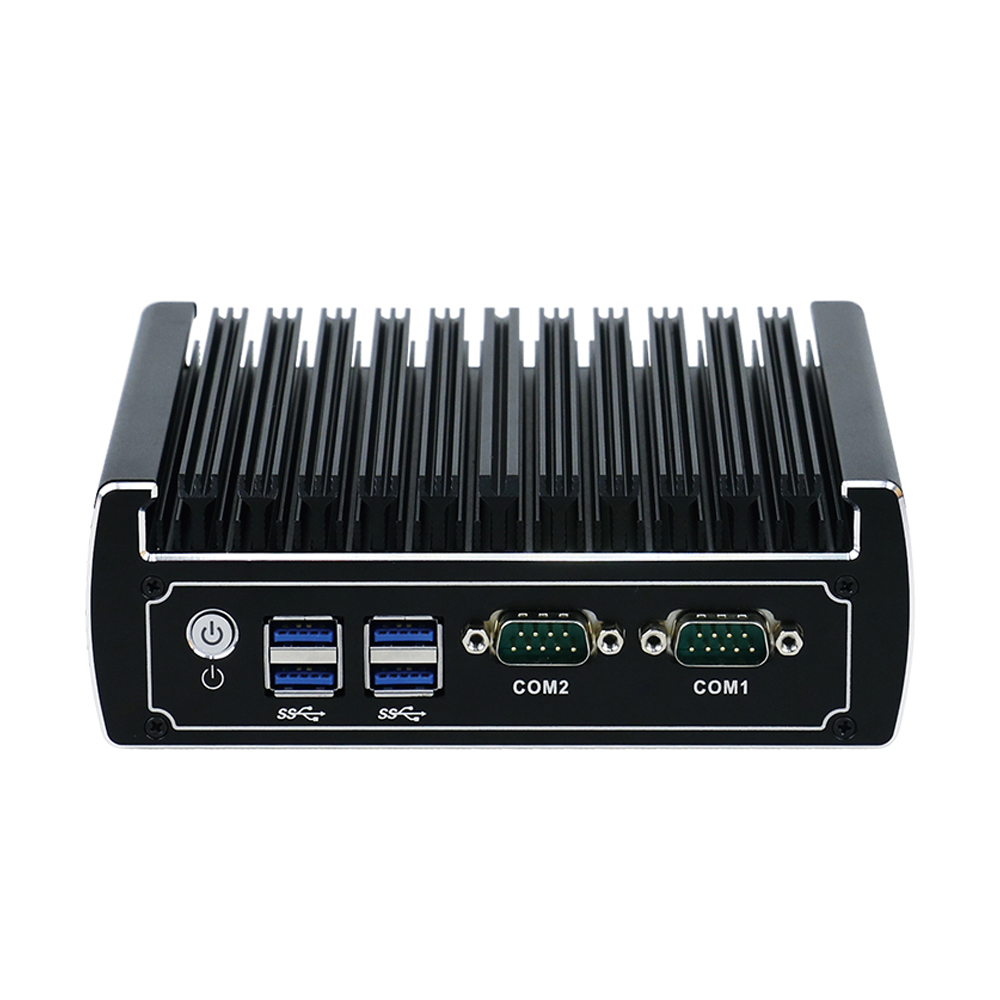
Optimize Industrial PC Software & Firmware for Long-Term Stability
Clean OS Deployment and Minimalist Configuration for Industrial PC Reliability
Start with a validated, minimal OS image—stripped of telemetry, consumer apps, and unused services like Bluetooth—to reduce the attack surface and background resource consumption by 15–20%. Enable write filters (e.g., Unified Write Filter) to protect system integrity against unintended configuration drift or malware persistence. Enforce least-privilege user accounts and restrict network ports to only those required for operation; industrial sites applying these controls see 60% fewer stability incidents. Automate deployments using tools like Windows Deployment Services to ensure consistency across fleets and eliminate manual configuration errors.
Strategic Driver, Firmware, and Bloatware Updates for Industrial PC Performance
Adopt a phased update strategy: validate firmware and driver patches in staging environments before production rollout. Prioritize updates that address CVE-listed vulnerabilities or documented hardware compatibility issues—delaying such patches increases failure risk by 40%, per the Ponemon Institute’s 2023 industrial systems report. Remove OEM bloatware to reclaim CPU and RAM resources; lean, purpose-built configurations consistently achieve 99.95% uptime in deterministic workloads. Use WSUS or similar enterprise patching infrastructure to schedule updates during planned maintenance windows—avoiding disruptive “Patch Tuesday” reboots altogether.
Windows 11 vs. LTSB/LTSC: Evaluating Industrial PC OS Suitability
| OS Type | Update Frequency | Industrial Suitability |
|---|---|---|
| Windows 11 | Bi-annual feature updates | Challenging for legacy hardware/software; best suited for flexible edge-computing roles requiring modern security and AI acceleration |
| LTSB/LTSC | 5–10 year support cycles | Ideal for fixed-function applications where certification stability, long-term validation, and minimal reboot frequency are critical—reducing required reboots by 70% versus standard Windows editions |
LTSB/LTSC eliminates consumer-oriented features, telemetry, and unscheduled updates—making it the authoritative choice for machinery control, HMI systems, and safety-critical automation where change control is mandatory.
Tune Industrial PC Hardware for Thermal, Acoustic, and Real-Time Demands
BIOS-Level Thermal Throttling Control and Fan Profile Calibration
Industrial PCs operate under ambient conditions that routinely exceed 50°C—making proactive thermal management essential for longevity and performance predictability. Configure BIOS thermal throttling thresholds to delay or avoid frequency downclocking until truly necessary, preserving real-time responsiveness during heat spikes. Calibrate fan profiles to match operational context: aggressive curves for high-load compute tasks, stepped or low-noise curves for medical or lab environments where acoustic disruption must be minimized. In dusty or corrosive settings, fanless designs eliminate mechanical wear entirely. Re-calibrate thermal profiles annually—or after major environmental changes—to counteract sensor drift and dust accumulation, both of which can degrade cooling efficiency and reduce throughput by up to 60% under sustained load.
RAM Integrity Testing and Storage I/O Tuning for Deterministic Workloads
Deterministic industrial applications demand memory reliability and storage latency consistency—not just raw speed. Conduct monthly RAM integrity tests using MemTest86 to detect early-stage bit-flip errors before they cascade into process faults or data corruption. For storage, align SSD partitions, disable OS-level indexing, and configure RAID 1 for redundancy—reducing read/write latency variance by 45%. In real-time control systems, SATA SSDs often outperform NVMe drives due to more predictable access timing, especially under mixed workloads. Pair ECC memory with journaled file systems like NTFS to maintain transactional integrity amid vibration, power fluctuations, or electromagnetic interference—key considerations in factory-floor deployments.
Align Industrial PC Operation with Real-World Production Requirements
Power Management and Real-Time Monitoring Integration for Predictive Maintenance
Industrial PCs should never enter unmanaged sleep states during continuous operations. Instead, configure staggered, low-stress power cycling—such as selective peripheral suspension or dynamic CPU voltage scaling—that reduces component thermal stress by 18% without interrupting workflows. Integrate real-time monitoring sensors for temperature, voltage ripple, fan RPM, and workload intensity. Feed this data into lightweight predictive algorithms capable of identifying early signs of degradation—like capacitor ESR drift or bearing wear in cooling fans—up to three weeks before failure. According to 2024 industrial automation benchmarking studies, facilities using such integrated monitoring report 23% fewer unplanned downtimes, shifting maintenance from reactive triage to scheduled intervention during planned line stops.
Domain-Specific Software Staging and Remote Maintenance Enablement
Industrial PCs must run software stacks tailored to specific production functions—not generic desktop configurations. Use containerized or virtualized staging environments to isolate mission-critical applications from non-essential background processes, cutting memory contention by up to 40% and improving determinism. For remote or geographically dispersed assets—especially in mining, energy, or water infrastructure—enable secure remote access via VPN-tunneled KVM over IP. This allows certified technicians to perform diagnostics, firmware updates, and configuration adjustments without onsite travel, slashing mean-time-to-repair by 65% in field deployments. Maintain fleet-wide consistency through standardized golden images, while permitting site-specific parameter tuning via centralized management consoles—preserving operational flexibility without sacrificing compliance or reliability.
FAQ
Why is leveraging LTSB/LTSC over Windows 11 recommended for industrial PCs?
LTSB/LTSC focuses on long-term support cycles without consumer-oriented features and frequent updates, making it ideal for fixed-function applications where stability and minimal reboot frequency are critical.
How can thermal management improve the performance of industrial PCs?
Effective thermal management through BIOS calibration and fan profile adjustments can prevent overheating, sustain predictable performance, and enhance the lifespan of industrial PCs operating in extreme ambient conditions.
What are the benefits of staged updates for industrial PCs?
Staging updates ensures that firmware and driver patches are validated before production rollout, minimizing disruptions and addressing compatibility issues or vulnerabilities in a controlled manner.
Why is predictive maintenance integration crucial for industrial PCs?
Predictive maintenance uses real-time monitoring to detect signs of potential failures early, reducing unplanned downtimes and enabling scheduled maintenance during planned operational breaks.