 EN
EN

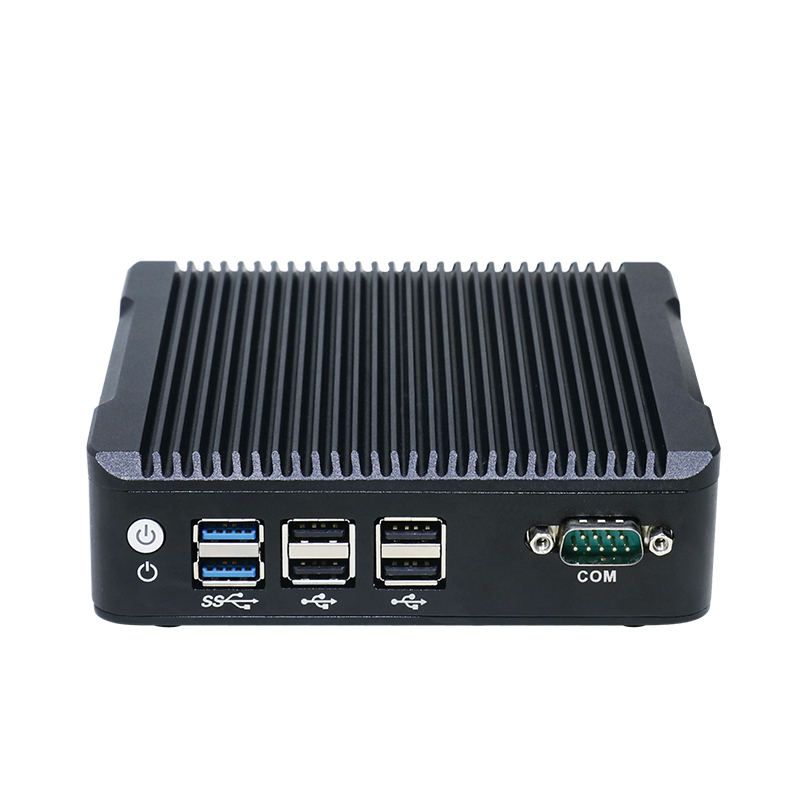
Defining the Industrial Mini PC: Purpose, Standards, and Key Differentiators
How an Industrial Mini PC Differs from Consumer and Commercial Mini PCs
Industrial mini PCs prioritize long-term reliability over peak performance. Designed for continuous operation in demanding settings—such as factory floors, outdoor substations, or refrigerated logistics hubs—they withstand extreme temperatures, dust, moisture, and mechanical vibration. In contrast, consumer mini PCs target home offices or media centers, while commercial models used in retail kiosks or digital signage lack ruggedization, certified ingress protection, or extended lifecycle support. Industrial variants feature IP65-rated enclosures, conformal-coated PCBs, and industrial-grade components rated for 105°C operation—enabling stable function where consumer units (rated 0°C–40°C) would fail. Their 5–7 year lifecycle support also contrasts sharply with the 1–3 year obsolescence cycles common in consumer and commercial segments.
Core Design Standards: Fanless Operation, Wide-Temperature Support, and Industrial-Grade Components
Fanless thermal design eliminates moving parts, preventing dust accumulation and failure points in contaminated environments. Combined with copper heat pipes and aluminum chassis, it enables reliable operation across -20°C to 70°C—critical for freezer warehouses, foundries, or desert-mounted infrastructure. Industrial-grade SSDs deliver shock resistance up to 50G, while military-spec capacitors sustain stable power delivery during surges or brownouts. These engineering choices align with recognized standards including MIL-STD-810H (vibration/shock), IEC 60068 (environmental testing), and IPC-A-610 (PCB assembly quality).
| Feature | Industrial Mini PC | Consumer/Commercial Mini PC |
|---|---|---|
| Operating Temp | -20°C to 70°C | 0°C to 40°C |
| Vibration Resistance | 5 Grms (MIL-STD-810H) | Not rated |
| Lifecycle Support | 5+ years | 1–3 years |
| Component Grade | Industrial (105°C) | Commercial (85°C) |
This disciplined adherence to industrial standards ensures predictable uptime in mission-critical automation systems.
Built for Harsh Environments: Ruggedness, Certifications, and Reliability Engineering
Environmental Resilience: -20°C to 70°C Operation, IP65 Enclosures, and Vibration/Moisture Resistance
Industrial mini PCs are engineered to operate where ambient conditions exceed typical IT equipment tolerances. Their validated -20°C to 70°C operating range supports deployment in unheated distribution centers, outdoor energy monitoring stations, and high-heat manufacturing zones. IP65-rated enclosures fully seal against dust ingress and resist low-pressure water jets—making them suitable for washdown environments in food processing or chemical handling. Integrated dampening mounts and reinforced internal structures absorb mechanical shocks and vibrations up to 5Grms (per MIL-STD-810H), mitigating fatigue-related failures. Fanless thermal management further enhances resilience by eliminating airflow-dependent cooling vulnerable to clogging in dusty or oily settings.
Reliability Enhancements: Conformal-Coated PCBs, Shock-Absorbing Mounts, and Extended Lifecycle Support
Beyond environmental sealing, reliability is embedded at the component level. Conformal coating on PCBs forms a protective polymer barrier against humidity, condensation, salt spray, and chemical exposure—reducing corrosion-related field failures by up to 60% in accelerated life testing. Shock-absorbing mounting kits isolate the unit from machinery-induced impacts during transport or operation, preserving solder joints and memory modules. Most critically, industrial mini PCs come with formal 5–7 year product lifecycle commitments—including BIOS/firmware updates, driver support, and component availability—ensuring compatibility with long-deployment automation systems. This structured longevity directly addresses operational continuity needs in industries where unplanned downtime averages $260,000 per incident.
Top Use Cases for a Mini PC for Industrial Applications
Factory Automation & Real-Time HMI: Legacy I/O Support (RS-232/485) and Deterministic Performance
In factory automation, industrial mini PCs serve as robust Human-Machine Interface (HMI) controllers and edge logic processors. Their deterministic real-time response—often sub-millisecond—supports time-critical tasks like robotic motion control, synchronized conveyor sequencing, and safety interlock monitoring. Native RS-232 and RS-485 serial ports enable seamless integration with legacy PLCs, sensors, and HMIs without costly protocol gateways. Compact form factors allow mounting directly on machine panels or inside control cabinets, reducing cable runs and latency. With industrial-grade components and fanless cooling, they sustain 24/7 operation in high-vibration, temperature-variable production environments—delivering the stability required for uninterrupted line throughput.
Edge AI and IIoT Deployment: On-Device Inference, Low-Latency Processing, and Secure Connectivity
Industrial mini PCs are foundational to scalable Edge AI and Industrial Internet of Things (IIoT) deployments. Equipped with dedicated AI accelerators or high-efficiency CPUs, they perform on-device inference for applications such as visual defect detection, predictive maintenance modeling, and acoustic anomaly identification—processing data locally to achieve sub-10ms decision latency. This eliminates cloud dependency for time-sensitive actions, enhancing safety and responsiveness in smart factories or remote infrastructure like oil rigs and wind farms. Security is hardened through hardware-rooted trust (TPM 2.0), encrypted VPN tunnels, and configurable firewalls—essential for protecting proprietary process data across distributed networks. Support for MQTT, OPC UA, and Time-Sensitive Networking (TSN) ensures interoperability with existing industrial protocols while reducing bandwidth consumption by more than 50% compared to cloud-only architectures.
Selecting the Right Industrial Mini PC: Critical Evaluation Criteria
Choosing the right industrial mini PC requires balancing environmental durability, functional capability, and long-term support—not just raw specs. Begin by mapping deployment conditions: confirm required operating temperature range (-20°C to 70°C is standard for harsh settings), IP rating (IP65 minimum for dust/water resistance), and vibration exposure (verify MIL-STD-810H compliance if mounted on moving equipment). Prioritize fanless designs with conformal-coated PCBs when contaminants like metal shavings, coolant mist, or conductive dust are present.
Next, match compute resources to workload demands: dual- or quad-core industrial CPUs with integrated graphics suffice for most HMIs and SCADA front-ends; AI inference workloads benefit from NPU-accelerated models or discrete GPU options. Ensure adequate RAM (8GB minimum for multitasking edge applications) and industrial SSD storage (with power-loss protection and wear leveling) for sustained write-intensive logging.
Connectivity must reflect real-world infrastructure: verify native RS-232/485 support for legacy machine integration, dual Gigabit Ethernet with TSN readiness for deterministic control networks, and optional 4G/5G or Wi-Fi 6E for remote sites. Crucially, validate vendor commitment to 5–7 year lifecycle support—including BIOS updates, driver maintenance, and component sourcing—to avoid mid-deployment obsolescence.
Finally, evaluate total cost of ownership: factor in extended warranties, mean-time-between-failure (MTBF) metrics (>100,000 hours is typical), and the financial impact of downtime. According to the Ponemon Institute’s 2023 study, unplanned industrial downtime costs manufacturers an average of $740,000 per hour—making upfront investment in proven ruggedness and support far more economical than reactive replacements or system redesigns.
FAQ Section
- What distinguishes an industrial mini PC from other types? Industrial mini PCs are designed for reliability in harsh environments, featuring rugged designs, IP65 enclosures, and components rated for high temperatures, differentiated from consumer and commercial models by their focus on reliability over performance.
- Why is fanless thermal design important in industrial mini PCs? Fanless design reduces failure points by eliminating moving parts that can accumulate dust, facilitating consistent operation in contaminated settings.
- What are the key criteria for selecting an industrial mini PC? Important factors include operating temperature range, IP rating, vibration resistance, compute capacity, connectivity, and vendor lifecycle support to ensure compatibility with long-term deployments.
- What are typical use cases for industrial mini PCs? They are predominantly used in factory automation, real-time HMI control, Edge AI and IIoT deployments, where they offer robust support for legacy systems and facilitate low-latency processing and secure connectivity.
- How does lifecycle support benefit industrial mini PCs? Lifecycle support enhances reliability by ensuring products receive timely updates and components are available throughout the life span, reducing the risk of obsolescence.