 EN
EN

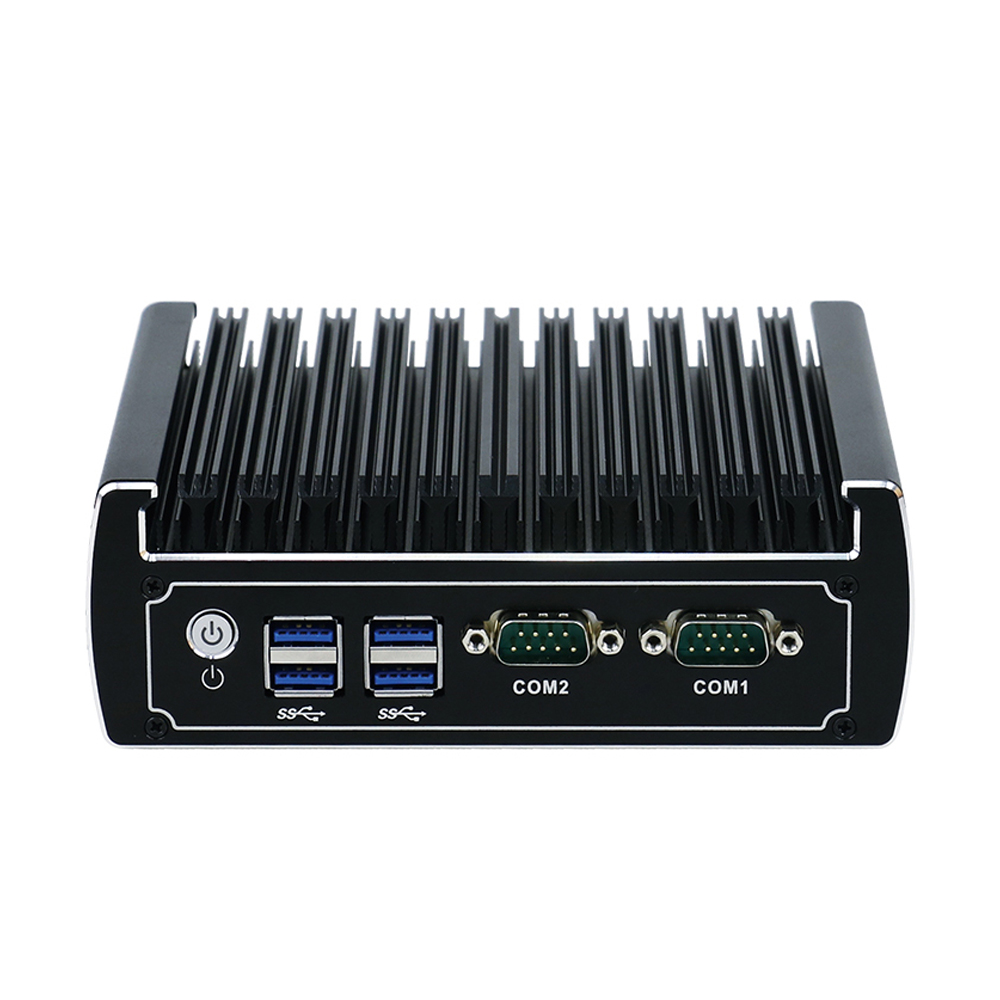
Robuuste constructie en milieuweerstand voor industriële omgevingen
Ventilatorloos thermisch beheer en stof-/waterbestendigheid volgens IP65/IP67
Industriële mini-PC's maken gebruik van ventilatorloos koelen met hooggeleidende aluminium- of koperlegeringen—waardoor onderdelen met bewegende delen, die gevoelig zijn voor storingen in stoffige en corrosieve omgevingen, worden geëlimineerd. Thermische beheerstudies (2024) tonen aan dat dit ontwerp het onderhoudsbehoeften met 40% vermindert. In combinatie met behuizingen met een IP65/IP67-classificatie blokkeren deze systemen betrouwbaar fijne deeltjes en hogedrukwatertanden—essentieel in voedingsverwerkende bedrijven en afvalwaterinstallaties, waar verontreiniging gemiddeld leidt tot jaarlijkse stilstandkosten van $740.000 (Ponemon, 2023). De afgesloten, luchtopeningloze constructie voorkomt ook binnendringing van chemicaliën en garandeert stil bedrijf in de buurt van geluidssensitieve meetapparatuur.
Schok-, trillings- en breedtemperatuurbestendigheid (-40 °C tot 85 °C)
Ontworpen voor extreme fysieke belasting: industriële mini-PC's weerstaan schokimpacten van 50G en werken continu onder trillingen van 5Grms—waardoor ze geschikt zijn voor montage op robots, mobiele mijnbouwapparatuur of spoorgebonden inspectiesystemen. Hun uitgebreid thermisch bereik (–40 °C tot 85 °C) elimineert de afhankelijkheid van HVAC-systemen in gieterijen, buitenlandse Arctische logistieke hubs of ongeconditioneerde controlekamers. Chassis van roestvrij staal en geïntegreerde trillingsdempende bevestigingen verminderen mechanische vermoeidheid en verlengen de levensduur van de hardware met 3–5 jaar ten opzichte van commerciële modellen bij continue productiegebruik.
Edge-intelligentie: AI-versnelling en real-time industriële computing
Industriële mini-PC's integreren nu speciaal ontworpen processors die AI-workloads direct aan de edge uitvoeren—waardoor inferentie met een latentietijd van minder dan één milliseconde mogelijk is voor robotnavigatie, real-time kwaliteitscontrole en adaptieve procesregeling, zonder afhankelijkheid van de cloud.
NVIDIA Jetson Orin versus Intel Core + VPU voor AI-inferentie in robotica- en zichtsystemen
NVIDIA Jetson Orin-modules leveren toonaangevende AI-throughput in de industrie—tot 275 TOPS—ideaal voor multi-sensorfusie en complexe gebrekkendetectie in high-speed zichtsystemen. Intel Core-processors met geïntegreerde VPUs bieden sterke compatibiliteit met bestaande machine vision-software en ondersteuning voor deterministische real-time besturingssystemen. De keuze hangt af van de complexiteit van de workload en de integratievereisten:
| Kenmerk | Jetson Orin | Intel Core + VPU |
|---|---|---|
| Piekmogelijkheden voor AI | 275 TOPS | 13 TOPS (alleen VPU) |
| Energie-efficiëntie | 15–60 W | 35–65 W |
| Ideaal Gebruiksgeval | Multi-sensor AI-robotica | Integratie met verouderde systemen |
Natuurlijke ondersteuning voor OPC UA, MQTT en TSN in industriële mini-PC's
Naadloze fabrieksintegratie begint met natieve protocolondersteuning. Toonaangevende industriële mini-PC's integreren OPC UA voor veilige, platformonafhankelijke apparaatcommunicatie; MQTT voor lichtgewicht, schaalbare IIoT-telemetrie; en Time-Sensitive Networking (TSN) voor microsecondenprecieze, deterministische gegevensoverdracht binnen gedistribueerde besturingssystemen. Dit elimineert externe gateways en vermindert de integratielatentie met 40% (Industrial IoT Report 2024), waardoor gesynchroniseerde bewegingsbesturing, voorspellende analyses en gesloten-regelautomatisering over productielijnen heen mogelijk worden.
Toepassingsspecifieke implementatie binnen belangrijke industriële sectoren
Voorspellend onderhoud en HMI-integratie met behulp van ARM-gebaseerde mini-PC's
ARM-gebaseerde mini-PC's zorgen voor responsieve, lage-latentie voorspellende onderhouds- en HMI-toepassingen—verwerking van trillings-, thermische en akoestische sensordata in realtime om afwijkingen te signaleren voordat een storing optreedt. Operationele efficiëntieonderzoeken bevestigen tot wel een vermindering van 45% in ongeplande stilstand wanneer deze worden ingezet samen met condition-monitoring-sensoren.
In HMI-functies biedt de ARM-architectuur vloeiende, touch-geoptimaliseerde dashboards voor centrale bewaking en besturing—zonder de thermische of stroomgerelateerde nadelen van x86-alternatieven. Belangrijke verticale voordelen omvatten:
- Verwerking : Real-time SPC-weergave en inline kwaliteitswaarschuwingen
- Logistiek : Dynamische statusweergave en padoptimalisatie voor robotvloten in magazijnen
- Energie : Afstandsdiagnose voor pitchregeling van windturbines en gezondheidsmonitoring van transformatoren
Hun stroomverbruik van minder dan 15 W minimaliseert de koelvereisten, terwijl compacte afmetingen directe montage op DIN-rails of panelen mogelijk maken—waardoor de feedbacklus tussen sensoren, PLC’s en operators wordt verkort.
Certificeringen, levensduur en totale eigendomskosten (TCO)
Het selecteren van industriële mini-PC's vereist meer dan alleen prestatiespecificaties: certificeringen volgens UL 62368-1 (veiligheid), IEC 60068 (omgevingsbelasting) en EN 50155 (spoorweg) bevestigen de betrouwbaarheid in missie-kritische omgevingen. Uitgebreide productlevenscycli—meestal 5–7 jaar—garanderen langdurige hardwarebeschikbaarheid en firmwarestabiliteit, waardoor kostbare herkwalificatiecycli, die veelvoorkomen in gereguleerde sectoren, worden voorkomen.
Een analyse van de totale eigendomskosten (TCO) laat zien dat de aanschafprijs minder dan 20% uitmaakt van de levensduurkosten. Verborgen kosten omvatten energieverbruik (gemeten in kWh/jaar), onderhoudsarbeid in gevaarlijke zones en catastrofale stilstand—gemiddeld $260.000/uur in discrete productie (Ponemon 2023). Het prioriteren van gecertificeerde, robuuste platforms met afstandsbeheer en redundante architectuur vermindert deze risico’s aanzienlijk.
Belangrijkste TCO-factoren
| CompoNent | Industriële impact | Kostenverlagingsstrategie |
|---|---|---|
| Energiegebruik | 24/7-bedrijf in edge-deployments | Ventilatorloze ontwerpen (15–30 W-systemen) |
| Onderhoud | Toegangsbeperkingen in gevaarlijke omgevingen | Mogelijkheden voor Afstandsmonitoring |
| Downtime | Productielijnstilstanden | Redundante componentarchitecturen |
Een proactieve TCO-strategie weegt uitgebreide garantiedekking, levenscyclusondersteuning en in de praktijk bewezen betrouwbaarheid – niet alleen de initiële kosten – om een optimale ROI over de volledige operationele levensduur te waarborgen.
Veelgestelde vragen
Wat maakt industriële mini-pc's geschikt voor extreme omgevingen?
Industriële mini-PC’s zijn ontworpen met koeling zonder ventilator en behuizingen met IP65/IP67-bescherming om stof- en waterinfiltratie te weerstaan, waardoor ze betrouwbaar zijn in omgevingen zoals voedingsmiddelenverwerkende bedrijven en afvalwaterinstallaties.
Hoe beheren industriële mini-PC’s extreme temperaturen?
Deze PC’s werken binnen een breed temperatuurbereik (-40 °C tot 85 °C) en zijn gebouwd om schokken van 50G te weerstaan, waardoor ze ideaal zijn voor extreme omgevingen zoals gieterijen en logistieke knooppunten in de Arctis.
Wat zijn de voordelen van het gebruik van een ARM-gebaseerde mini-PC voor industriële toepassingen?
ARM-gebaseerde mini-PC’s zijn energiezuinig met een stroomverbruik van minder dan 15 W, geschikt voor voorspellend onderhoud en HMI-toepassingen, en ondersteunen real-time verwerking om ongeplande stilstand te verminderen.
Waarom is certificering belangrijk voor industriële mini-PC's?
Certificeringen zoals UL 62368-1 en EN 50155 bevestigen dat de PC's bestand zijn tegen milieu- en bedrijfsgerelateerde belastingen, wat betrouwbaarheid garandeert in missie-kritische omgevingen.