 EN
EN

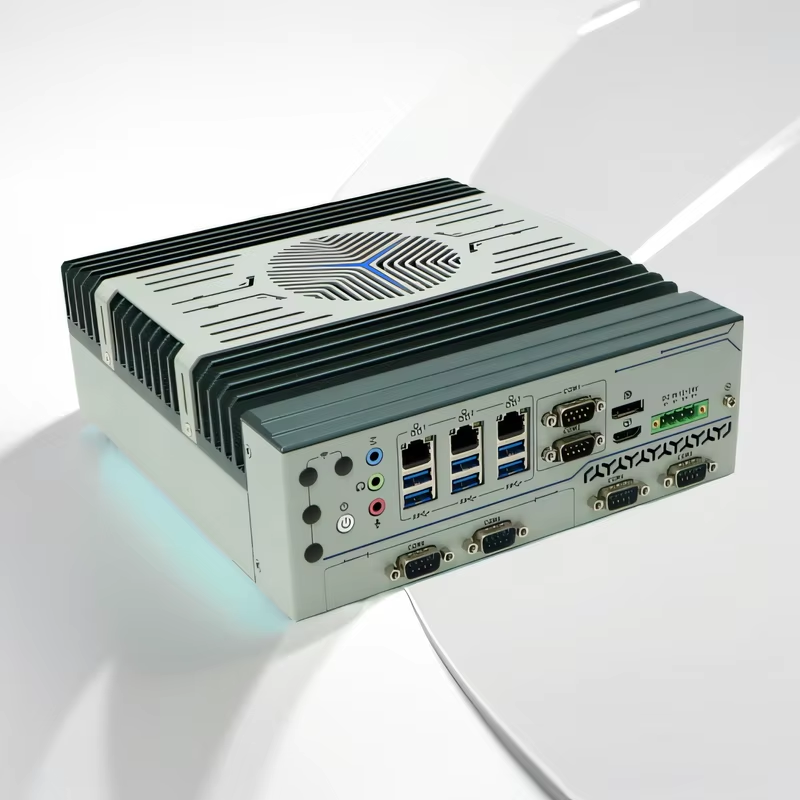
When Standard Hardware Simply Won't Survive
Walk onto any factory floor, outdoor monitoring site, or transportation hub, and the environmental conditions tell a clear story. Temperatures swing from freezing overnight to blistering afternoon highs. Dust and particulate matter hang in the air. Vibration from heavy machinery travels through floors and mounting surfaces. Moisture—sometimes just humidity, sometimes direct splashing—threatens every exposed component.
Standard commercial computers aren't built for this. Their cooling fans draw in dust-laden air. Their hard drives contain moving parts that fail under vibration. Their cases lack the seals needed to keep out moisture. Durable embedded computers address these weaknesses through design choices that prioritize survival over cost savings. The difference shows up in mean time between failures, service call frequency, and total cost of ownership over the equipment's lifespan.
Understanding Ingress Protection Ratings
The IP rating system, defined by EN 60529, provides a standardized way to understand how well an enclosure protects against solids and liquids. The first digit indicates protection against solid objects—dust, dirt, and accidental contact. The second digit covers liquid ingress—from dripping water to high-pressure jets. An IP65 rating means the device is completely dust-tight and protected against low-pressure water jets. IP66 offers protection against more powerful water jets. IP67 allows for temporary immersion.
These ratings matter because they translate directly to real-world survival. An embedded computer deployed at a roadside traffic cabinet faces constant dust from passing vehicles and occasional spray from rain or street cleaning. IP65 provides adequate protection. The same device installed near a washdown station in a food processing facility needs IP66 or higher. Understanding the rating system helps match the hardware to the environment rather than guessing and hoping.
Temperature Extremes and Passive Cooling
Fanless design represents one of the more important developments in durable embedded computers. Removing the cooling fan eliminates a common failure point—fans wear out, bearings seize, blades accumulate dust until they stop spinning. But fanless operation requires different thermal management. The processor generates heat that must be dissipated through the enclosure itself, using the chassis as a giant heatsink.
This approach works well in environments with moderate ambient temperatures. The challenge comes in extreme conditions. A durable embedded computer in a desert solar installation might see internal temperatures well above what passive cooling can handle. The same device in a cold storage warehouse faces the opposite problem—condensation forming on internal components when warm, humid air meets cold surfaces. Proper thermal design accounts for both scenarios, using materials with appropriate thermal conductivity and coatings that resist moisture accumulation.
| Environmental Factor | Risk to Standard Hardware | Durable Embedded Computer Solution |
|---|---|---|
| Temperature Extremes | Component failure, thermal shutdown | Wide-temperature components, passive cooling |
| Dust and Particulates | Fan blockage, overheating, contact failure | Sealed enclosures, no moving parts |
| Vibration and Shock | Mechanical failure, connection loosening | Solid-state storage, reinforced mounting |
| Moisture and Humidity | Short circuits, corrosion, condensation | IP-rated seals, conformal coatings |
| Electromagnetic Interference | Data corruption, communication errors | Shielded enclosures, filtered I/O |
Vibration Tolerance and Solid-State Storage
Mechanical hard drives have no place in extreme environments. The read-write heads float mere nanometers above spinning platters. Vibration causes head crashes. Shock during transport or installation can render a drive unusable. Durable embedded computers use solid-state storage exclusively—no moving parts, no heads to crash, no platters to scratch.
The difference in reliability shows up in field data. Facilities that switched from traditional PCs to embedded computers with solid-state storage reported fewer storage-related failures. The improvement wasn't marginal—it was dramatic enough to change procurement decisions across entire organizations. Beyond storage, the entire system benefits from reduced mechanical complexity. Fewer moving parts means fewer things to break, which means less maintenance and fewer emergency replacements.
The Mounting and Connectivity Challenge
Extreme environments don't just challenge internal components—they stress physical connections too. Standard Ethernet ports with plastic clips break under repeated cable pulls. USB ports loosen over time with vibration. Power connectors work loose, causing intermittent shutdowns that are maddeningly difficult to diagnose.
Durable embedded computers address these weak points through reinforced connectors, locking mechanisms, and industrial-grade I/O. M12 connectors, originally developed for industrial sensors and actuators, provide secure, vibration-resistant connections for Ethernet and power. These connectors thread into place rather than relying on friction clips. They maintain connection integrity even under continuous vibration. The difference sounds minor until you've spent hours troubleshooting an intermittent connection that only fails when a nearby machine is running at full speed.
A Real-World Deployment: Coastal Monitoring Station
A coastal environmental monitoring station operated by a state agency presented a textbook case for durable embedded computers. The station sat on a pier, exposed to salt spray, high winds, temperature swings from near-freezing winter nights to humid summer afternoons, and constant vibration from wave action transmitted through the pier structure.
The original deployment used standard industrial PCs with fans and mechanical drives. Failure rates were high—roughly one-third of units required service within the first year. The agency replaced them with fanless embedded computers featuring IP66-rated enclosures, wide-temperature components, and solid-state storage. The improvement was substantial. Service intervals extended from months to years. The computers simply kept running, collecting sensor data and transmitting it back to headquarters without complaint. The upfront cost difference was quickly offset by reduced maintenance visits and eliminated emergency replacements.
When Durable Doesn't Mean Indestructible
A honest assessment recognizes the limits. Durable embedded computers survive conditions that would destroy standard equipment, but they're not invincible. Extreme temperatures beyond their rated range will eventually cause failure. Prolonged exposure to corrosive chemicals can degrade seals and coatings. Physical impacts beyond specified tolerances can damage enclosures and internal components.
The key is matching the hardware's specifications to the actual operating environment—not the ideal environment, not the environment someone wishes existed, but the real one. This means understanding temperature ranges across seasons, assessing dust and moisture levels, measuring vibration if possible, and selecting equipment with ratings that provide a safety margin. Over-specifying costs more upfront but reduces failures. Under-specifying saves money initially but leads to higher total costs over time. The right balance depends on the specific application and its tolerance for downtime.
Table of Contents
- When Standard Hardware Simply Won't Survive
- Understanding Ingress Protection Ratings
- Temperature Extremes and Passive Cooling
- Vibration Tolerance and Solid-State Storage
- The Mounting and Connectivity Challenge
- A Real-World Deployment: Coastal Monitoring Station
- When Durable Doesn't Mean Indestructible