 EN
EN

The Stakes Are Different on the Factory Floor
Industrial IT environments share some similarities with traditional enterprise networks, but the differences matter more. A compromised email server creates headaches. A compromised programmable logic controller can stop a production line, damage equipment, or create safety hazards. The consequences scale differently. This fundamental distinction drives the need for security approaches that account for operational technology's unique characteristics.
Hardware firewall devices provide a level of isolation that software-based alternatives struggle to match. They sit between the corporate network and the industrial control network, enforcing strict rules about what traffic can pass between the two. This separation isn't just about keeping bad actors out—it's also about preventing issues on the business side from affecting production. A misconfigured DHCP server or a broadcast storm on the IT network shouldn't bring down a manufacturing line. Hardware firewalls help maintain that boundary.
Why Industrial Protocols Demand Specialized Handling
Standard firewalls understand TCP/IP. They handle HTTP, SMTP, and the usual enterprise protocols without issue. But industrial networks speak a different language. Modbus, Profinet, EtherNet/IP, DNP3, and a dozen other protocols carry commands that directly control physical processes. A generic firewall device might not recognize these protocols at all, treating them as unknown traffic and either blocking them or passing them without inspection.
Industrial-grade hardware firewall devices include protocol-aware deep packet inspection. They understand the structure of industrial protocol messages and can identify anomalies—malformed requests, out-of-sequence commands, or traffic patterns that deviate from normal operation. This capability matters because attacks on industrial systems often exploit protocol weaknesses rather than network-layer vulnerabilities. A firewall that can't see the application layer can't protect against these threats.
The Performance Equation: Latency Matters
Enterprise networks tolerate latency in the hundreds of milliseconds without noticeable impact. Industrial control networks often operate on much tighter timelines. A motion control loop might require updates every few milliseconds. A safety interlock system expects responses within a defined window. Add too much latency anywhere in the path, and the system fails.
Hardware firewalls designed for industrial use address this through several mechanisms. They offload packet processing to dedicated hardware rather than relying on general-purpose CPUs. They maintain state tables in fast memory rather than disk. They apply inspection rules efficiently enough to avoid introducing measurable delay. The result is security without compromising performance. Software firewalls running on shared hardware can't always make that same guarantee, particularly under load.
Segmentation as a Security Strategy
The IEC 62443 standard formalizes what many industrial security practitioners already knew: networks should be divided into zones, and traffic between zones should be controlled. Hardware firewall devices serve as the enforcement points for these zone boundaries. They implement the "restricted data flow" requirement that sits at the heart of the standard's security model.
Practical segmentation looks different in every facility. Some organizations separate IT from OT entirely, with a hardware firewall as the only connection point. Others create additional zones within the OT network—separating safety systems from control systems, or isolating legacy equipment that can't be patched. The hardware firewall devices at each boundary enforce the rules, logging traffic and blocking violations. This layered approach limits the damage any single compromise can cause. An attacker who breaches the IT network still faces additional barriers before reaching critical production systems.
| Deployment Scenario | Primary Function | Key Consideration |
|---|---|---|
| IT-OT Boundary | Control all traffic between corporate and production networks | Rule set must balance security with operational needs |
| OT Internal Zones | Isolate safety systems, legacy equipment, and critical assets | Protocol-aware inspection essential |
| Remote Access Point | Secure external connections for maintenance and monitoring | Requires strong authentication and encryption |
| DMZ Segment | Host services accessible from both IT and OT | Firewall rules must be precise and well-documented |
What Happens When Firewalls Are Missing
A chemical processing plant in the Gulf Coast region learned this lesson the hard way. The facility had grown over decades, adding networked control systems without a corresponding investment in network security. The IT and OT networks were effectively one flat network. When a routine software update on an IT server triggered unexpected network traffic, the control system experienced intermittent communication failures. Nothing malicious—just a broadcast storm from a misbehaving application. But the production impact was immediate and costly.
The plant spent several days tracing the issue, all while production ran at reduced capacity. The eventual fix involved installing hardware firewall devices between the IT and OT networks, along with proper segmentation rules. The experience highlighted a point that's easy to overlook: security isn't just about defending against attackers. It's also about maintaining operational stability in the face of routine IT activities that can inadvertently disrupt industrial systems.
The Practical Upside of Dedicated Hardware
Hardware firewall devices offer advantages beyond security. They provide clear administrative boundaries. Network teams know where the IT network ends and the OT network begins. Incident response becomes more straightforward—logs from the firewall show exactly what traffic crossed the boundary and when. Compliance audits benefit from the same clarity.
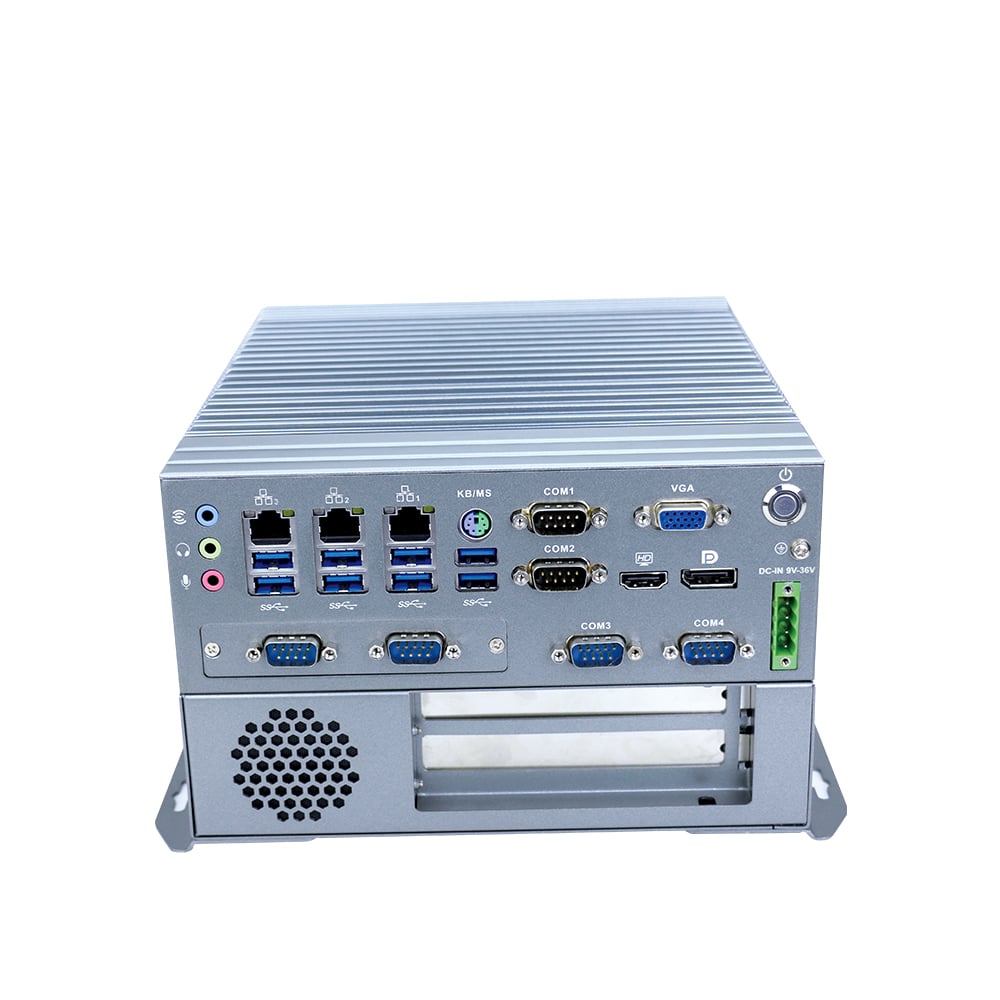
The devices themselves are built for continuous operation. They lack moving parts, use passive cooling, and include redundant power options in many configurations. These design choices reflect the operating environment—industrial settings aren't climate-controlled server rooms. Temperature fluctuations, vibration, and dust are facts of life. Hardware designed for these conditions lasts longer and fails less often than general-purpose equipment pressed into security service.