 EN
EN

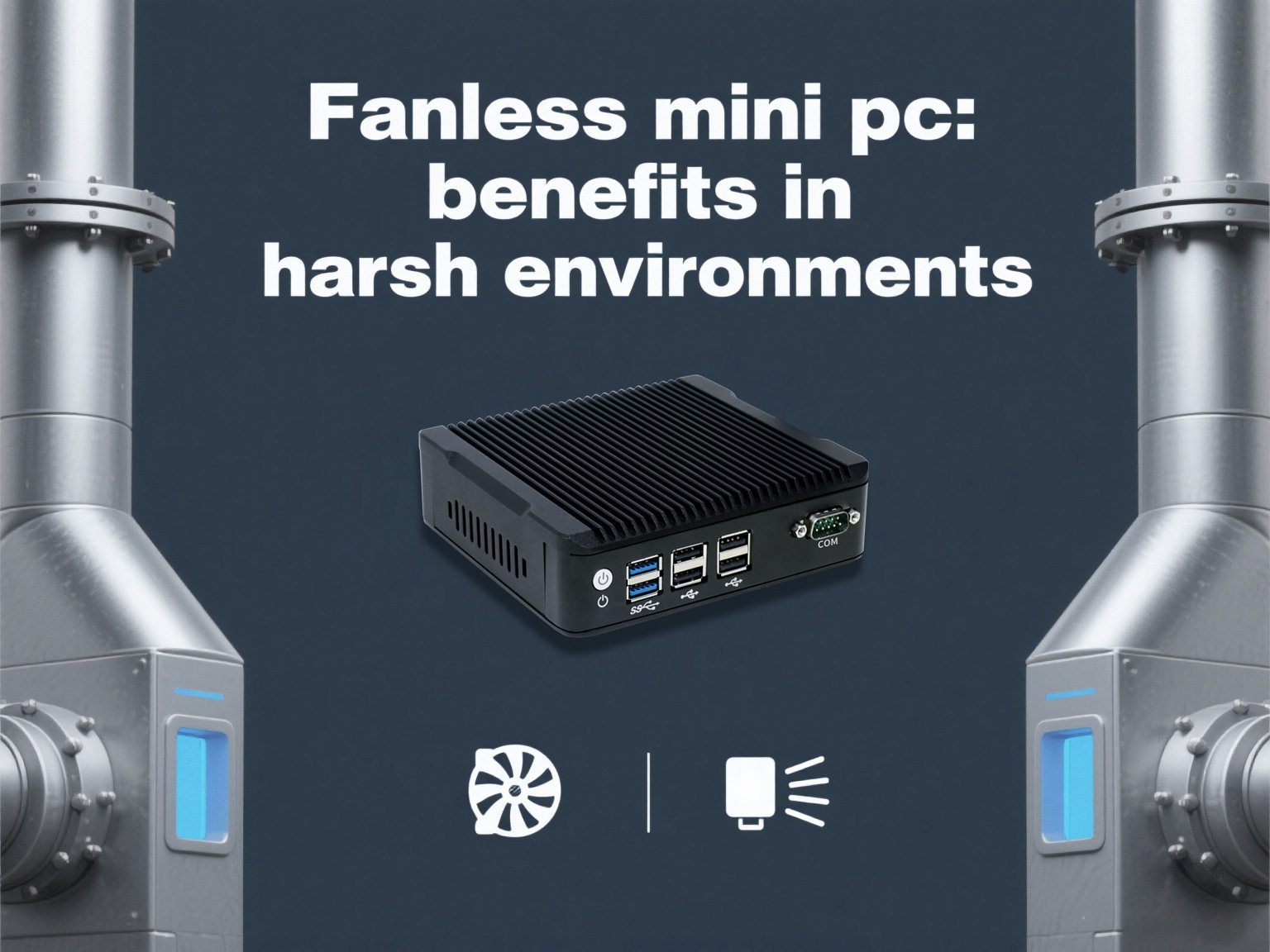
Understanding Environmental Challenges: Dust, Moisture, and Vibration
Electronic systems are subjected to harsh conditions in harsh industrial areas, the place that the popular PC fail. Dust intrusion restricts airflow and moisture leads to corrosion of internal components, two of the leading causes of electronics failure within industrial and outdoor applications. Vibration of heavy equipment speeds up the wear of parts that are moving; studies of the industry, they say, show that 78% of vibration-related failures occur in the cooling fans. solutions that are ideal for IP65-rated environments that must be sealed from dust and liquids as well.
How Fanless Mini PC Eliminates Failure Points With Solid-State Construction
Breaking down several kind of mobile legs such as fan, llano mini ended up fanless mini goes comparison chart with so-called gelid architecture in this particular. The use of industrial-grade components soldered to multilayer PCB boards are the key to the bridge amplifier's reliability and durability by ensuring the elimination of intermitent failures that can occur with wire connected devices due to shock and vibration intraoperative. Cool core temperatures at any clock speed help maintain hardware stability to support your marathon gaming sessions || Count on the super durable structure of your keyboard while you blast through the digital battlefield with a 50 million keystroke lifespan || Water resistant with 26 key rollover || 9 bright, easily adjustable RGB lighting zones support 16.8 million colors, making Vantar the perfect ally for late night gaming sessions || Aluminum unibody construction reduces the game winning flexharsh being permanent || This space saving design ensures that VANTAR will fit even in your tiny gaming dens || Reduce fatigue and played even longer || Stainless steel base panels are easy to grind off pits and knife marks || Metal scratch elimination design, understated elegance || Rubber feet provide stability and preventing slipping during intense gaming sessions || Aluminum unibody construction reduces the game winning flexharsh being permanent || Measuring less than 22 mm thin, Vantar is the thinnest gaming keyboard in the Tt esports family. This build minimizes possible points of failure and offers a fanless design for reliable operation in challenging conditions including continuous vibration and high-impact.
Passive Cooling and Sealed Enclosures for 24/7 Rugged Operation
The advanced thermal design of fanless mini-PCs can work from -40°C-85° without air flow. Copper-based heat pipes and graphene-coated heat spreaders are used to move processor heat to the chassis, which then serves as a passive radiator. When used with pressure-equalized sealed enclosures, this design provides condensation free performance and reproduces consistent humidity levels. Mining field-proven “14,000+ hour MTBF,” (triple that of actively cooled versions in transferring dust-intensive environments.
Operating Reliably From -40°C to 85°C: Thermal Design of Industrial Fanless Mini PC
Fanless mini PCs achieve extreme-temperature resilience through precision-engineered components and advanced thermal modeling. Industrial-grade materials like aerospace-grade aluminum alloys maintain operational integrity across swings that would cripple conventional PCs. Designs incorporate military-standard thermal testing (MIL-STD-810H), validating performance in environments from Arctic cold storage to desert solar farms.
Heat Dissipation Innovations in Fanless Mini PC for Extreme Conditions
Key passive cooling advancements enable fanless systems to dissipate 30W of heat without airflow dependency:
- Vapor chambers spreading heat 3x faster than traditional copper pipes
- Anodized aluminum casings with 450% greater surface area through fractal-inspired fins
-
Phase-change materials absorbing thermal spikes during rapid load changes
These innovations outperform actively cooled systems struggling with dust-clogged vents in high-temperature environments.
Comparing Active vs. Passive Cooling in Temperature-Critical Applications
Field data reveals passive cooling’s reliability advantages:
| Metric | Active Cooling | Fanless Mini PCs |
|---|---|---|
| MTBF (25°C ambient) | 60,000 hours | 100,000 hours |
| Dust-related failures | 18% annually | 0.2% annually |
| Maintenance cycles | Quarterly | Triennial |
Passive systems eliminate 87% of moving part failures while reducing energy consumption by 40%, making them indispensable for applications like offshore drilling monitors.
Sealed, Fanless Design Prevents Contamination in Harsh Environments
Fanless mini PCs meet IP65/66 standards, blocking dust particles as small as 75 microns. Eliminating ventilation grilles prevents moisture ingress, key in 40% of industrial equipment failures. Marine-grade aluminum with powder-coated finishes withstands 72-hour salt spray tests, critical for coastal facilities like oil refineries.
Advantages of Small Form Factor in Industrial Enclosures and Mobile Machinery
Fanless mini PCs (often under 200mm wide) enable direct DIN rail mounting or embedded installation within robotic arms. Their compact design reduces cable clutter by 40% compared to traditional setups, eliminating clearance requirements for airflow.
Integration in IoT Edge Gateways and HMI Systems
Modern HMI panels embed fanless computers directly into touchscreen assemblies for streamlined control. In oil refineries, this simplifies configuration through built-in RS-485 ports. For IoT edge applications, these systems handle protocol conversion tasks within 15W power budgets, ideal for remote monitoring stations.
Use in Transportation, Surveillance, and Autonomous Systems
Transportation sector adoptions highlight the technology’s versatility:
- Railway infotainment: Withstands 5Grms vibration
- Autonomous forklifts: Processes LIDAR data at -30°C
- Toll systems: Runs license plate recognition in dust-heavy conditions
Surveillance integrators report 92% uptime improvements by replacing vented NVRs with fanless PCs in coastal camera housings.
Next-Gen Thermal Materials and Efficiency Improvements
Advanced materials like graphene-enhanced pads enable 40% better heat dissipation than conventional solutions, critical for edge deployments. Market adoption is accelerating, with a projected 28% CAGR through 2033 as factories prioritize energy-efficient computing.
Expanding Role in Smart Cities and Edge Computing
Fanless mini PCs anchor 83% of smart city initiatives, processing sensor data within 8ms latency thresholds. Rugged computing demand will reach $12.42B by 2034, fueled by offshore wind farms and EMI-resistant designs for steel mills and rail yards.
FAQ
What is a fanless mini PC?
A fanless mini PC is a compact computer designed to operate without cooling fans, using passive cooling technologies to manage heat.
Why are fanless mini PCs suitable for harsh environments?
These PCs are ideal for harsh environments due to their sealed design, which prevents dust and moisture intrusion while reducing vibration-related failures.
How do fanless mini PCs achieve high-performance cooling?
They use vapor chambers, anodized aluminum casings, and phase-change materials to efficiently dissipate heat without airflow dependency.
What industries benefit from fanless mini PCs?
Industries like oil refineries, transportation, and surveillance benefit from fanless PCs due to their compact size, reliability, and ability to withstand extreme conditions.
Table of Contents
- Understanding Environmental Challenges: Dust, Moisture, and Vibration
- How Fanless Mini PC Eliminates Failure Points With Solid-State Construction
- Passive Cooling and Sealed Enclosures for 24/7 Rugged Operation
- Operating Reliably From -40°C to 85°C: Thermal Design of Industrial Fanless Mini PC
- Heat Dissipation Innovations in Fanless Mini PC for Extreme Conditions
- Comparing Active vs. Passive Cooling in Temperature-Critical Applications
- Sealed, Fanless Design Prevents Contamination in Harsh Environments
- Advantages of Small Form Factor in Industrial Enclosures and Mobile Machinery
- Integration in IoT Edge Gateways and HMI Systems
- Use in Transportation, Surveillance, and Autonomous Systems
- Next-Gen Thermal Materials and Efficiency Improvements
- Expanding Role in Smart Cities and Edge Computing
- FAQ