 EN
EN

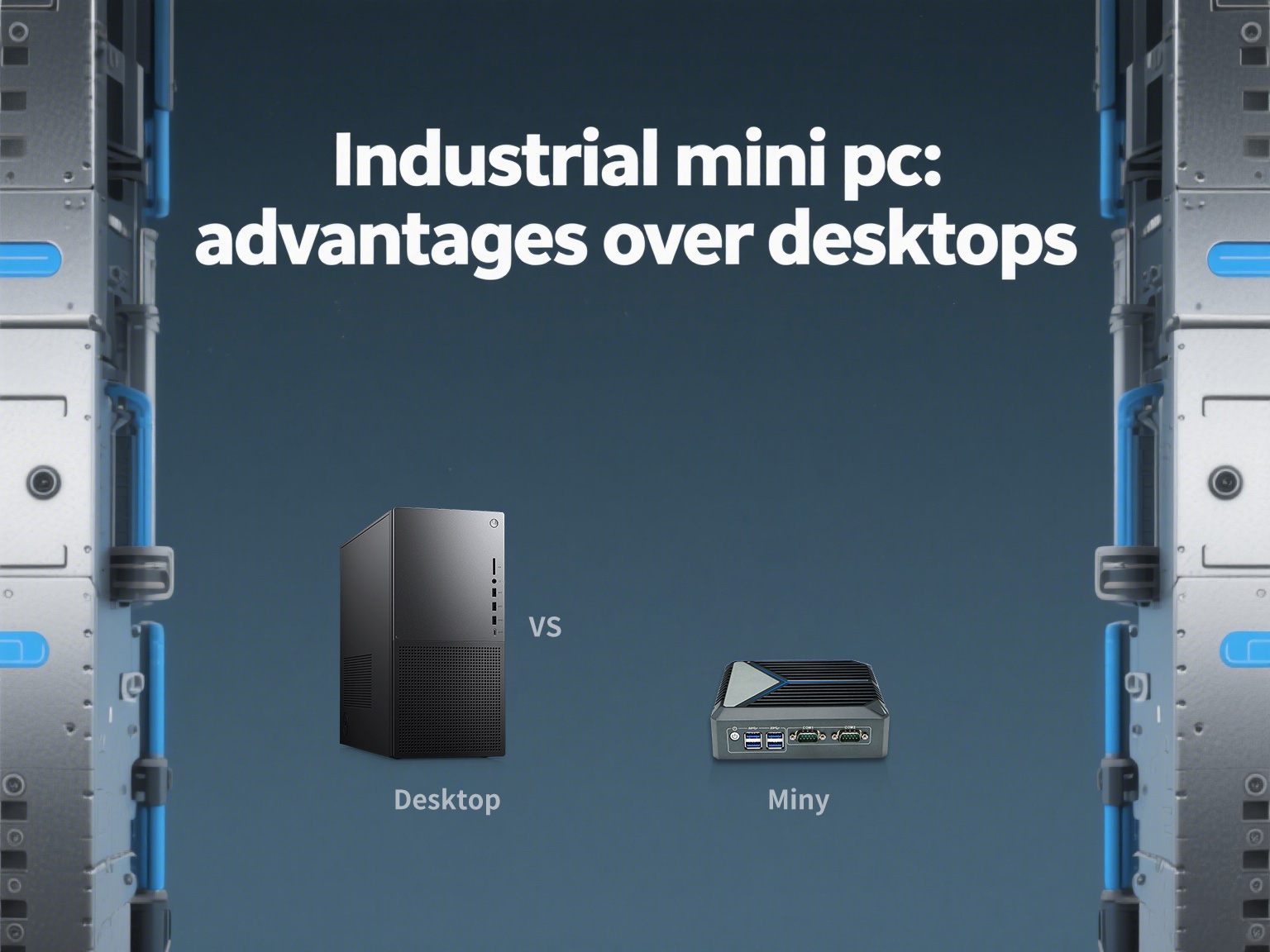
Compact and Space-Efficient Design for Industrial Environments
Small footprint enables deployment in tight or constrained industrial spaces
Industrial mini PCs take up to 90% less space than typical workstations with small foot prints typically 8” x 6” x 2”. This compactness even makes it possible to install the system in locations that have so far been considered impossible, such as enclosures on the machine side, control niches on conveyor belts, or cabins of mobile equipment. Being smaller than conventional systems, these systems do not require a specific server room, therefore saving valuable floor space for production-related activities.
Comparison with traditional desktops highlights superior spatial efficiency
| Feature | Traditional Desktop | Industrial Mini PC |
|---|---|---|
| Volume | 450-600 in³ | 50-80 in³ |
| Weight | 15-25 lbs | 2.5-4.5 lbs |
| Mounting Options | Desk/Floor Only | DIN Rail/VESA/Wall |
| Power Draw | 150-300W | 12-45W |
The 80% volumetric reduction enables installation in control panel recesses or alongside PLCs, while the 70% weight decrease supports overhead mounting in gantry systems.
Design flexibility supports integration into control panels and machinery
Mini Industrial PC products mount directly to standard DIN rail mounting brackets or attach to a back panel for a variety of industries. It’s modular I/O configuration (4-8x USB, dual LAN, isolated COM ports) makes it connectable to all kinds of sensors, HMIs and legacy machines with no external adapters. This plug and play capability reduces production downtime for upgrades – essential in industries such as automotive manufacturing where line stoppages are worth $22k/min.
Rugged, Fanless Construction for Reliable Operation in Harsh Conditions
Fanless Design and Solid-State Components Enhance Durability
The use of industrial mini PCs eliminates mechanical cooling fans, which are one of the leading causes of failure in traditional computer systems. This fanless design keeps out dust -- a key advantage if you're in a factory or building site. When combined with state-of-the-art solid-state components, these systems feature IP50 dust protection and experience 2.5x fewer hardware failures compared to a standard desktop in simulated vibration testing.
Extended Temperature Tolerance Ensures Stable Performance in Extreme Environments
Engineered for -40°C to 85°C operation, industrial mini PCs maintain functionality in environments where standard PCs falter. A 2024 field study found these systems maintain 99.96% uptime in temperature-fluctuating automotive assembly lines, outperforming traditional industrial computers by 34%.
Reduced Heat Output and Silent Operation Improve Reliability
Passive cooling architectures cut heat generation by up to 70% compared to fan-cooled systems, minimizing thermal stress on adjacent machinery components. The absence of moving parts ensures near-silent operation—critical for noise-sensitive quality control labs and medical manufacturing zones.
Energy Efficiency and Lower Total Cost of Ownership
Lower power consumption reduces operational costs
Industrial mini PCs consume 40-60% less power than traditional industrial desktops. For example, a typical 15W mini PC system can replace a 90W desktop configuration—cutting annual electricity costs by £300-£800 per unit.
Energy-efficient performance supports sustainability goals
The reduced energy footprint helps manufacturers meet carbon reduction targets. Mini PCs enable 12-18% reductions in facility-wide power consumption compared to legacy setups.
Long-term savings through reduced cooling needs and electricity usage
By generating less heat, industrial mini PCs decrease HVAC demands. Over a typical 5-year lifecycle, this thermal efficiency combines with lower power draw to deliver £1,200-£2,000 in total savings per unit.
Flexible Deployment and Seamless Integration in Industrial Systems
Portability and compact form factor allow quick reconfiguration
Industrial mini PCs enable rapid repositioning across assembly lines. Their 0.5-2.5 kg weight allows technicians to relocate units in minutes during production shifts.
Embedded mounting options enable direct integration into machinery
VESA mounts, DIN rail compatibility, and panel-mount designs eliminate the need for secondary enclosures, reducing cable clutter by 40% compared to externally housed systems.
Support for industrial AI and edge computing enhances real-time data processing
Modern industrial mini PCs process sensor data locally, slashing latency by 62% in quality inspection tasks compared to cloud-dependent systems.
Long-Term Reliability and Minimal Maintenance Requirements
Absence of moving parts increases resilience and uptime
Industrial mini PCs achieve 98.6% uptime in continuous operations, with failure rates reduced to 2.3% through solid-state construction.
Extended lifecycle reduces replacement frequency and maintenance costs
| Metric | Mini PC | Industrial Desktop |
|---|---|---|
| 5-year maintenance | $120 | $890 |
| Replacement frequency | 10 years | 4 years |
Real-world performance in extreme conditions
Field data reveals mini PCs experience 89% fewer critical failures in extreme temperatures (-40°C to 85°C) compared to fan-cooled desktops. Sealed enclosures and conformal-coated circuit boards prevent corrosion and particulate ingress.
FAQs About Industrial Mini PCs
Why are industrial mini PCs considered space-efficient?
Industrial mini PCs are considered space-efficient because they take up to 90% less space than traditional desktops, allowing deployment in constrained spaces such as control panel recesses and machinery cabins.
What makes industrial mini PCs suitable for harsh environments?
The fanless design, solid-state components, and durable enclosures make industrial mini PCs ideal for harsh environments by preventing dust ingress and ensuring extended temperature tolerance.
How do industrial mini PCs achieve energy efficiency?
Industrial mini PCs consume significantly less power than traditional desktops, reducing operational costs and meeting sustainability goals with their reduced energy footprint and lower heat output.
Can industrial mini PCs support AI and edge computing?
Yes, modern industrial mini PCs support industrial AI and edge computing by processing data locally, reducing latency, and enhancing real-time data processing capabilities.
Table of Contents
- Compact and Space-Efficient Design for Industrial Environments
- Rugged, Fanless Construction for Reliable Operation in Harsh Conditions
- Energy Efficiency and Lower Total Cost of Ownership
- Flexible Deployment and Seamless Integration in Industrial Systems
- Long-Term Reliability and Minimal Maintenance Requirements
- FAQs About Industrial Mini PCs