 EN

Beyond the Default Configuration
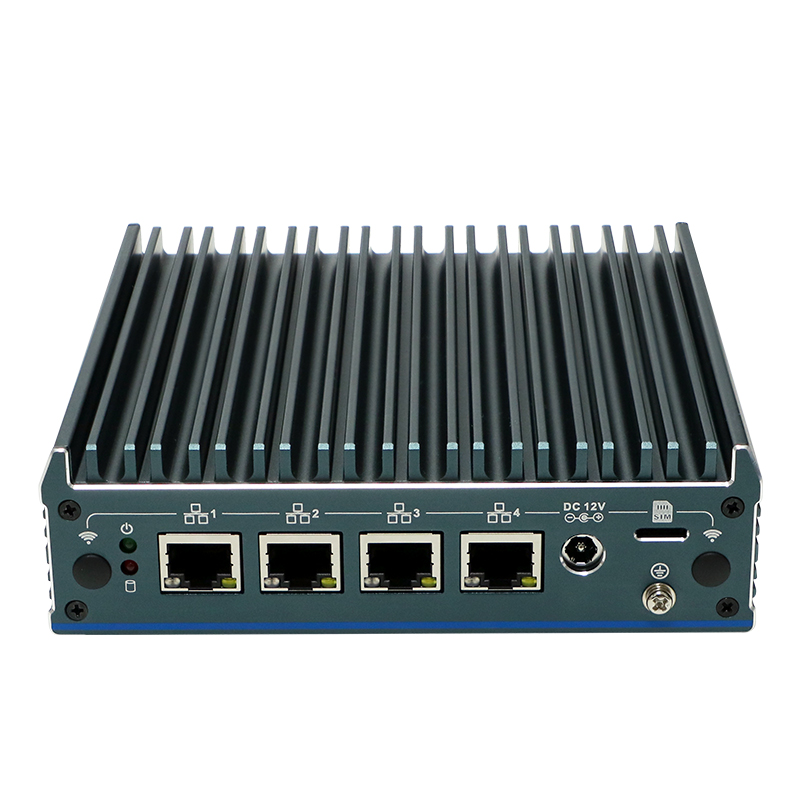
Default firewall configurations exist for a reason—they get systems running quickly with minimal friction. But they also represent a baseline, not an endpoint. The default rule sets that ship with most firewall devices are designed to work in a wide range of environments. They prioritize connectivity over security, allowing broad access that simplifies initial deployment. Leaving them unchanged creates unnecessary exposure.
Maximizing firewall effectiveness means moving beyond default settings. It means understanding the specific traffic patterns of the network being protected and tailoring rules accordingly. It means applying the principle of least privilege not just in theory but in practice—allowing only what's explicitly required and denying everything else. The effort required is modest compared to the security improvement gained.
Rule Set Hygiene: Clean Up the Accumulated Cruft
Firewall rule sets tend to grow organically over time. A temporary rule added for a vendor visit becomes permanent. A test rule for a new application stays in place long after the application goes live. Exceptions accumulate, each one adding complexity and potential exposure. The result is a rule set that no one fully understands and that contains far more allowances than necessary.
Regular rule set reviews address this problem. The process is straightforward: export the current rule set, document what each rule actually does, verify that each rule is still needed, and remove or tighten anything that isn't. The first review often yields the biggest reduction—many organizations find that 20-30% of their rules can be eliminated or consolidated. Subsequent reviews catch the smaller accumulations before they grow large.
| Rule Review Activity | Frequency | Expected Outcome |
|---|---|---|
| Full rule set audit | Annually | 20-30% reduction in rule count |
| Exception rule review | Quarterly | Remove or justify temporary rules |
| Log analysis for unused rules | Monthly | Identify rules with zero hits |
| Change control verification | Per change | Ensure rules match approved requests |
Logging: The Underused Diagnostic Tool
Firewall logs contain a wealth of information that goes untapped in many deployments. Every allowed connection, every blocked attempt, every rule match generates a log entry. These logs document normal traffic patterns, reveal unusual activity, and provide evidence when something goes wrong. Yet many organizations treat logging as a compliance checkbox rather than an operational tool.
Effective log management starts with understanding what's being logged. Not every event needs the same level of detail. Logging every allowed connection in a high-traffic environment creates storage problems. Logging only blocked connections and unusual events provides actionable intelligence without the overhead. The key is configuring log levels appropriately—detailed enough to be useful, selective enough to be manageable. Regular log reviews, even brief ones, catch issues that automated alerts might miss.
Industrial Protocol Inspection: Beyond Port-Based Rules
Standard firewall rules that rely on port numbers don't provide adequate protection for industrial networks. An attacker can send malicious Modbus commands over port 502—the standard Modbus port—and a port-based rule will happily pass them through. The firewall sees the correct port and allows the traffic without examining what's inside.
Industrial firewall devices with protocol-aware inspection examine the content of industrial protocol messages. They understand the structure of Modbus requests, the command set of Profinet, the data format of EtherNet/IP. This understanding lets them identify anomalies—a Modbus write command to a read-only register, a sequence of commands that doesn't match normal operating patterns, a message that exceeds reasonable size limits. These anomalies often indicate either misconfiguration or active attack. Protocol-aware inspection catches both.
The IEC 62443 standard explicitly requires this type of restricted data flow enforcement between zones. Port-based rules don't meet the standard's requirements. Protocol-aware inspection does. Organizations subject to compliance requirements need to verify that their firewall devices support this capability and that it's properly configured.
Redundancy and Failover: Planning for the Inevitable
Firewall devices will eventually fail. Power supplies degrade. Firmware updates go wrong. Configuration errors lock out administrators. The question isn't whether failure will happen—it's whether the network stays protected when it does.
High-availability configurations address this by pairing firewall devices in active-passive or active-active setups. In an active-passive configuration, one device handles all traffic while the second stands ready. If the active device fails, the passive device takes over with minimal interruption. Active-active configurations distribute traffic across both devices, providing load balancing as well as redundancy.
The configuration effort is non-trivial. State tables must synchronize between devices so that active connections survive a failover. Routing must account for the change in active device. Testing must verify that failover works as expected. But the effort pays off when a power supply fails at 2 AM and production continues uninterrupted.
A Real-World Scenario: Remote Access Done Right
A water utility serving a mid-sized metropolitan area needed to provide remote access for equipment vendors and maintenance contractors. The original solution used a VPN appliance with broad access rules—any authenticated user could reach any device on the OT network. The arrangement worked but created significant exposure. A compromised vendor account would provide access to the entire control system.
The utility redesigned the remote access architecture using firewall devices with granular access controls. Each vendor received access only to the specific systems they needed to support. Maintenance contractors could reach only the equipment at the sites they serviced. The firewall enforced these restrictions at the network level, supplementing the VPN's authentication with authorization rules that limited what authenticated users could actually do. The new arrangement reduced the attack surface substantially without adding complexity for legitimate users.
Monitoring and Alerting That Actually Helps
Firewall devices generate alerts for a reason—to draw attention to events that need investigation. But alert fatigue is real. Too many alerts, especially low-quality ones, lead to ignored notifications and missed incidents. Effective alerting requires tuning: reducing false positives, prioritizing critical events, and ensuring that alerts reach the right people.
Start by categorizing alerts by severity. Configuration changes, administrative logins, and critical failures need immediate attention. Repeated login failures from external addresses merit investigation but maybe not a 2 AM page. Traffic spikes to unusual destinations fall somewhere in between. The categorization should reflect the organization's risk tolerance and operational constraints. A 24/7 manufacturing operation has different alerting needs than a daytime-only office network.
Regular alert review sessions, conducted weekly or monthly, identify patterns that individual alerts don't reveal. A series of low-severity alerts from different sources might together indicate a coordinated attack. The review process also provides feedback for tuning—alerts that consistently prove irrelevant can be suppressed or reconfigured.
Table of Contents
- Beyond the Default Configuration
- Rule Set Hygiene: Clean Up the Accumulated Cruft
- Logging: The Underused Diagnostic Tool
- Industrial Protocol Inspection: Beyond Port-Based Rules
- Redundancy and Failover: Planning for the Inevitable
- A Real-World Scenario: Remote Access Done Right
- Monitoring and Alerting That Actually Helps