 EN

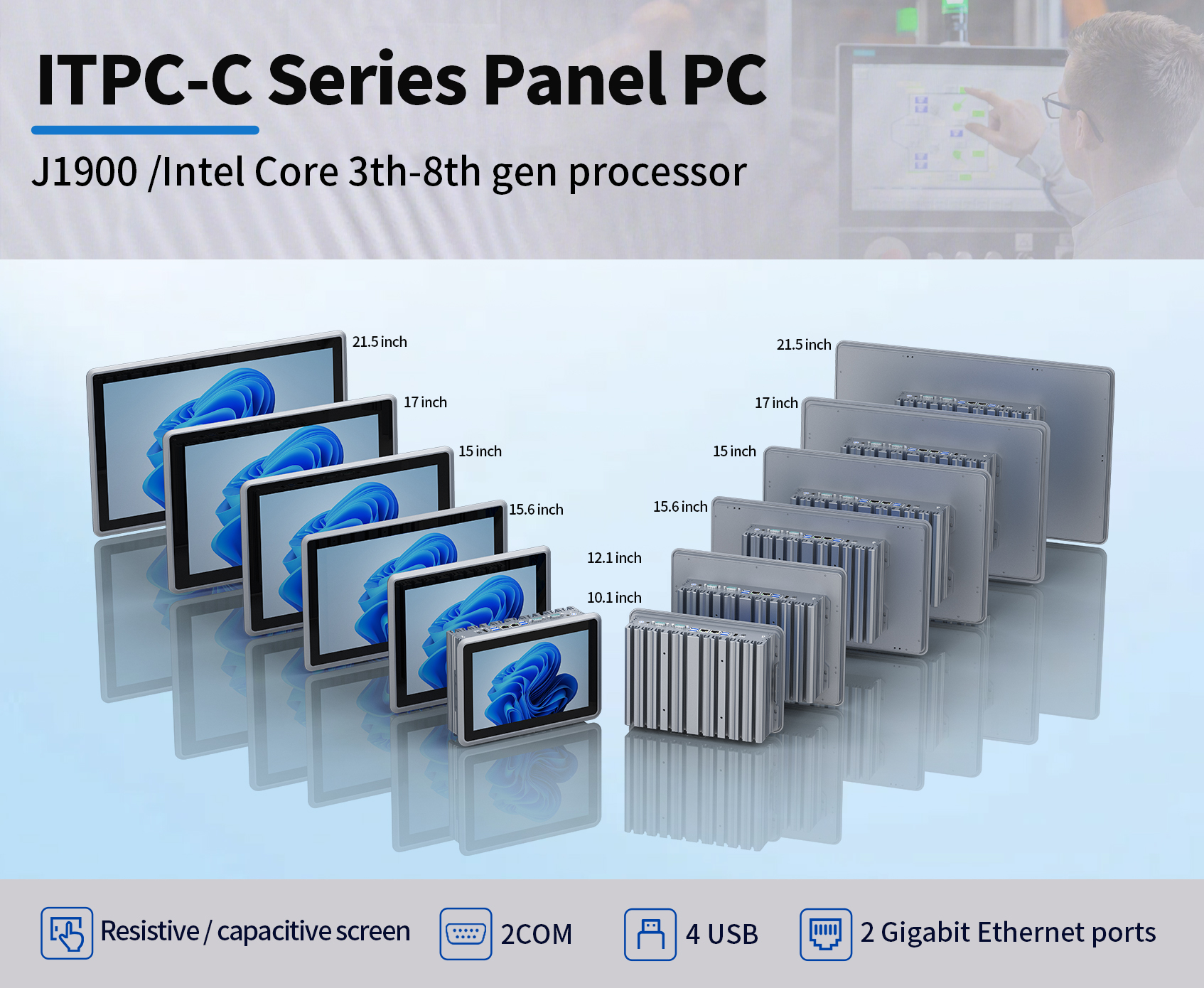
The mini PC market hit roughly USD 24.7 billion in 2025 and is tracking toward USD 46.3 billion by 2035, growing at about 6.6% annually. Those numbers sound great on a pitch deck. But talk to anyone actually running a production line, and the conversation shifts fast to memory shortages, thermal headaches, and the brutal reality that smaller brands grew just 1.5% in Q4 2025 while the big five captured everything else.
That gap tells a story. Small computer manufacturers aren't losing because they build bad products. Many of them build excellent ones. They're losing because the ground keeps shifting under their feet, and the companies that survive are the ones treating manufacturing discipline, not marketing, as the real differentiator.
What Separates Industrial-Grade Builds from Consumer Boxes
A fanless embedded computer looks simple from the outside. A metal chassis, some ports, maybe a DIN rail mount. The engineering inside is anything but simple.
Conduction cooling is the first hard problem. Without a fan, heat has to travel from the processor through the heatsink, into the chassis, and out to the mounting surface. Every thermal interface in that chain has to be right. A gap of a fraction of a millimeter in the thermal pad, or a screw that isn't torqued to spec, can create a hot spot that shortens component life. Systems designed for -25°C to 70°C operation don't achieve that range by accident. It comes from deliberate thermal path design and manufacturing consistency.
Then there's the power side. Industrial environments bring voltage sags, surges, and electrical noise that consumer electronics never see. Compliance with IEC 61000-6-2 pushes radio frequency immunity from the standard 3 V/m all the way to 10 V/m, and conducted immunity from 3 V to 10 V. Meeting those numbers requires filtering, isolation, and PCB layout decisions that add cost and complexity. There's no way to fake it after the fact.
The table below shows how the requirements diverge between a typical commercial mini PC and an industrial embedded system.
| Requirement | Commercial Mini PC | Industrial Embedded PC |
|---|---|---|
| Thermal design | Active fan cooling | Fanless conduction cooling |
| Operating temperature | 0°C to 40°C (typical) | -25°C to 70°C (wide-temp variants) |
| EMC immunity (radiated) | 3 V/m | 10 V/m per IEC 61000-6-2 |
| EMC immunity (conducted) | 3 V | 10 V per IEC 61000-6-2 |
| Mounting | Desktop or VESA | DIN rail, wall mount, panel mount |
| Lifecycle availability | 12-18 months | 5-7 years minimum |
That last row matters more than most buyers realize. A commercial mini PC might use a motherboard revision that gets discontinued within a year. For a factory automation deployment running hundreds of units, that's a disaster. Industrial-focused small computer manufacturers plan component lifecycles around 5-7 year windows, sometimes longer, because ripping out and replacing edge controllers across a production floor isn't something anyone wants to do twice.
The Manufacturing Floor Is Where Promises Get Tested
Walk onto the production floor of a serious industrial PC operation, and you'll notice something immediately. The pace is slower than a consumer electronics assembly line, and that's intentional.
Torque-controlled screwdrivers are standard, not optional. Every screw has a spec, and every spec has a sequence. Why? Because vibration is one of the most common killers of embedded systems in the field. A screw that's slightly loose on the factory floor becomes a loose screw after six months of machine vibration, and a loose screw becomes an intermittent fault that's nearly impossible to diagnose remotely.
Static protection gets similar attention. The mainboards, memory modules, and chipsets inside these systems are sensitive to ESD damage that might not show up during initial testing. A discharge that damages a trace today can manifest as intermittent behavior months later. Proper ESD workstations, grounded wrist straps, and conductive foam storage aren't bureaucracy. They're the difference between a product that works and one that generates warranty claims.
Conformal coating is another step that separates industrial from commercial. The boards get a thin layer of protective coating to handle humidity, salt spray, and dust. The coating thickness has to be controlled within a tight window. Too thin and the protection fails. Too thick and thermal dissipation suffers. After coating, UV inspection confirms even coverage across critical areas. This isn't glamorous work, but it's the kind of process control that determines whether a system survives three years in a chemical plant or fails in six months.
Why Component Sourcing Is the Quiet Crisis
If there's one topic that keeps small computer manufacturers up at night in 2026, it's memory supply.
IDC's research manager Jitesh Ubrani put it bluntly: "Large consumer electronics brands are well positioned to leverage their scale and memory allocations to capture shares from smaller and regional vendors. However, the severity of the shortage raises the risk that smaller brands may not survive". That's not a prediction about product quality or engineering capability. It's a warning about purchasing power.
The dynamic works like this. Memory manufacturers allocate supply based on volume commitments. A company ordering millions of units gets priority. A company ordering tens of thousands waits. When supply tightens, the smaller buyer doesn't just pay more. They might not get allocated at all, or they get allocated a smaller quantity than needed to fulfill existing orders.
IDC expects average selling prices to rise in 2026 as vendors pivot toward midrange and premium systems to offset component costs. For small computer manufacturers, that pivot is tricky. Moving upmarket means competing more directly with established brands that have deeper engineering benches and stronger channel relationships. Staying in the value segment means margins get squeezed to nothing.
The companies navigating this well tend to have a few things in common. They maintain buffer inventory on critical components, even when carrying costs are painful. They design products with component flexibility in mind, so a single source disruption doesn't halt an entire product line. And they build relationships with distributors and second-source suppliers long before a crisis hits. This isn't about clever procurement tricks. It's about recognizing that supply chain resilience is an engineering problem, not just a purchasing one.
A Medical Device Deployment That Exposed Hidden Gaps
A few years back, a project involving point-of-care diagnostic equipment in a hospital network ran into a problem that looked like a software bug but wasn't.
The systems were compact fanless units mounted inside sealed enclosures on mobile carts. They worked fine in the lab. In the hospital, units in certain wings would occasionally reboot or freeze. The software team spent weeks chasing driver conflicts before someone noticed that the failures clustered around imaging rooms.
The issue turned out to be electromagnetic interference. The diagnostic carts were passing near MRI and CT equipment, and the embedded systems weren't adequately shielded against the radiated emissions in that environment. The fix required redesigning the enclosure grounding and adding filtering on the power input. The units that had passed basic EMC testing in a lab still failed in the real world because the lab test didn't replicate the specific field conditions.
This kind of scenario is exactly why the gap between a commercial-grade mini PC and a properly engineered industrial embedded system matters. A consumer-focused device might survive standard FCC Part 15 testing and still fall apart in a hospital corridor. The difference isn't the processor or the RAM. It's the accumulated engineering decisions around shielding, grounding, filtering, and enclosure design.
For teams specifying embedded computers for sensitive environments, the lesson is straightforward. Ask about the testing conditions, not just the certifications. A CE mark or FCC declaration confirms minimum compliance. It doesn't guarantee performance in the specific electromagnetic environment where the system will actually operate.
Reliability Testing That Actually Predicts Field Performance
There's a meaningful difference between testing a product and testing it in a way that simulates real deployment.
A typical industrial computer goes through several stages of validation before it ships. Visual inspection catches obvious defects. Functional testing verifies that ports, displays, and communication interfaces work. System configuration checks confirm the software and hardware match the build specification. These are table stakes.
The more revealing test is the burn-in process. Industrial-grade units often run under load at elevated temperatures for extended periods. The exact duration varies by manufacturer and application, but the principle is consistent: stress the system hard enough that early-life failures surface in the factory rather than in the field. Solder joint microcracks, capacitor parameter drift, and marginal thermal interfaces tend to show up under sustained thermal load. A system that runs cool for a few hours in a climate-controlled room hasn't really been tested.
There's a practical limitation here that's worth acknowledging. Burn-in testing adds cost and time. It's not something every small manufacturer can afford to do at scale, especially for lower-volume custom configurations. The honest answer is that not every product needs the same level of validation. A digital signage player in a climate-controlled retail space has different reliability requirements than a controller running a CNC machine in a metalworking shop. Matching the testing protocol to the deployment environment is part of what separates experienced manufacturers from those still learning.
What to Actually Look For in a Manufacturing Partner
The specifications sheet matters less than the process behind it. Here's what tends to separate capable small computer manufacturers from the rest.
-
Lifecycle planning. Ask how long the core platform will be available. If the answer is "as long as the components are on the market," that's a red flag. Industrial customers need commitments measured in years, not quarters.
-
Thermal validation data. Request temperature test results, not just the operating range claim. A system rated for 70°C should have data showing it actually performs at 70°C under load, not just that it doesn't instantly shut down.
-
Supply chain transparency. Understanding which components have single-source risk and what contingency plans exist for each is essential for anyone deploying at scale.
-
Customization depth. OEM and ODM services vary widely. Some manufacturers offer minor tweaks to a reference design. Others can modify the board layout, I/O configuration, and mechanical enclosure. Knowing which level of customization is available before committing to a design cycle saves months of rework.
-
Testing documentation. Every unit should have traceable test records. If a failure occurs in the field, the ability to pull up the exact test data from that serial number is invaluable for root cause analysis.
These aren't abstract preferences. They're the practical criteria that determine whether a deployment succeeds or turns into a support nightmare.
Shenzhen Xin Saike Technology, known as XSK, has been operating in this space for over two decades, with a manufacturing base in Dongguan covering more than 5,000 square meters and a product range that spans mini industrial PCs, embedded systems, industrial panel PCs, and network security platforms. The company holds certifications including CCC, CE, FCC, RoHS, and TUV, and offers OEM/ODM services with low minimum order quantities, which matters for teams that need customization without committing to consumer-scale volumes. For buyers evaluating partners, that combination of manufacturing depth and flexible order structure is worth examining, especially when the alternative is trying to fit a consumer-grade device into an industrial application where it was never designed to survive.
Table of Contents
- What Separates Industrial-Grade Builds from Consumer Boxes
- The Manufacturing Floor Is Where Promises Get Tested
- Why Component Sourcing Is the Quiet Crisis
- A Medical Device Deployment That Exposed Hidden Gaps
- Reliability Testing That Actually Predicts Field Performance
- What to Actually Look For in a Manufacturing Partner