 EN
EN

Understanding 1U Servers in Modern Data Centers
What is a 1U Rack Mount Server?
A 1U rack mount server is a system that is designed for mounting within a rakc enclosure, the standard measure of a rack unit being 1.75 inches, within a server rack. Such servers are popular in many data centers because they efficiently pack space, and can serve many applications. They commonly contain key operations for data processing, storage and networks and are a fit for applications including telecommunications and enterprise IT. Organizations like these are using 1U servers having in highest density devices which can handle extreme computing applications all the while keeping operational flexibility and a reasonable price.
Key Design Features: Mini ITX Motherboards and Compact Components
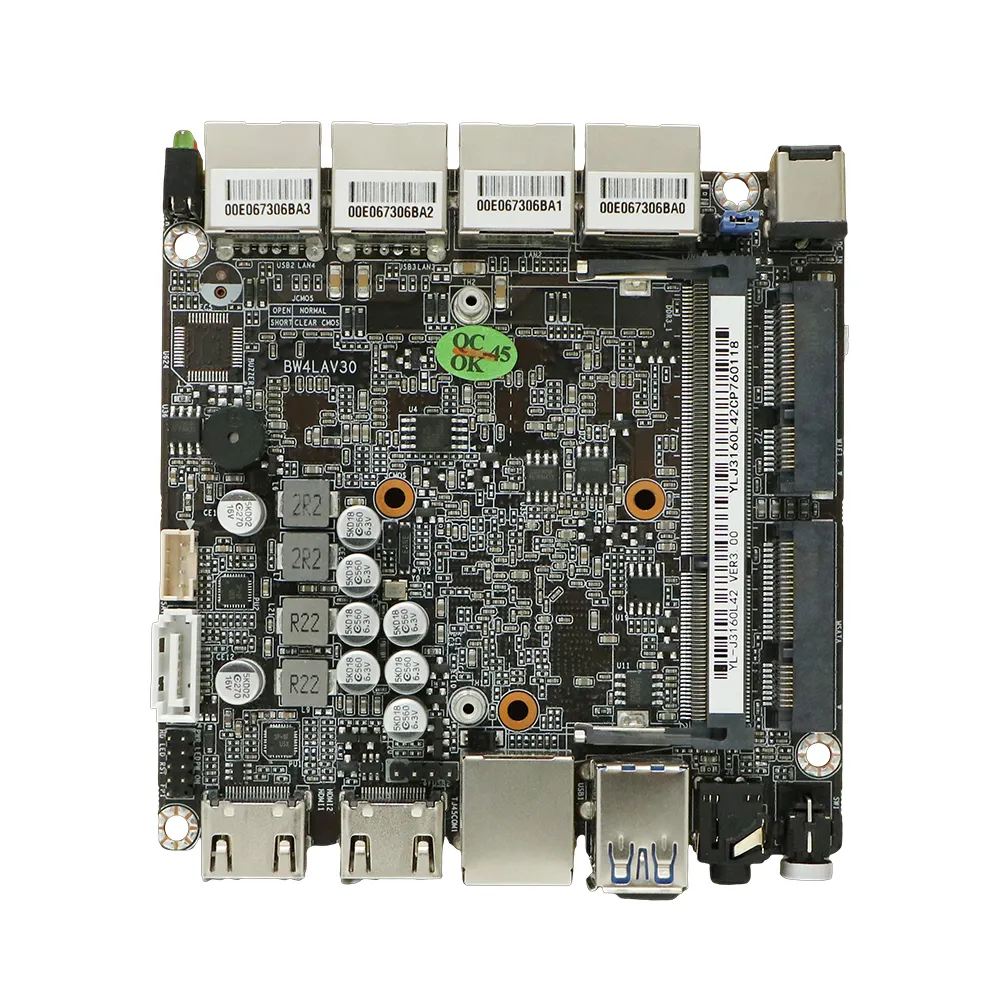
In 1U servers, Mini ITX motherboards have played a significant role in providing enough functionality in a small form factor while remaining power efficient. By supporting 1U servers, they enable data center to maximize hardware utilization in space-constrained environments. Their efficiency is also driven by the space-saving components they house, such as a rigid motherboard and power-hungry GPU. For example, high-performance servers such as the Intel Xeon E processors use these motherboards to become reliable, fast, flexible and scalable building blocks that customers need. The integration of these devices is important to accommodate heavy workloads and to reduce power consumption.
Advantages of 1U Servers for Space Efficiency
The biggest benefit of 1U servers is that they greatly minimize space in data centers when compared with larger rack mounts. This slim design allows organizations to store more in less space. Companies now stand to gain up to 30% more efficient use of space for 1U servers, with corresponding significant reductions in overhead that accrue to physical infrastructure costs. Additionally, due to a reduced server footprint, organizations will recognize better operational efficiencies and reduced floor space requirements, providing a more capital and efficient scale of resources.
1U vs 2U Servers: Comparing Form Factors for Optimization
Physical Dimensions and Rack Density
Dimension comparison is important for 1U vs 2U server. 1U, for 1.75 inches, is physically smaller when compared to a 2U, or 3.5 inches. This difference will have a great impact on the rack density because more 1U servers can be installed in a rack, which can be used to maximize the using of the space. That said, it should be recognized that greater rack density can lead to cooling complications in a server room. The higher density of servers will mean greater electricity use for ventilation and cooling to counter the heat produced, and perhaps feat in airflow design.
Performance Trade-offs in High-Density Environments
In high-density deployments, the relative strengths of 1U and 2U servers are more obvious. 1U servers must live with the power and thermal constraints space to save, though they so not do so without a sacrifice to performance. While 1U servers tend to have less room for airflow and larger/better cooling gear, they can struggle with heavier heat output and heavy load. One the other hand, 2U servers, owing to the bigger chassis and the support to larger fans and bigger heat sink, they may dissipate heat much better. That makes them capable of long-term high-level performance suitable for workloads that need vertical scaling. Expert viewpoints are commonly that the decision among these servers ought to be based on specific workload needs and facility coolness capacity.
Cost Implications for Scalable Deployments
It’s all about the dollars If we’re looking at whether to use 1U vs 2U servers, it’s a matter of assessing the financial trade-offs over larger scale deployments. 1U servers of course free up physical space and require less power, which can equate to lower operating costs for data centers. Higher initial cost is not necessarily a characteristic of TOWs since they are of a more compact design and are often deployed in smaller, more efficient installations. But these savings may be neutralized by increased cooling costs, particularly for high performance applications. On the other hand 2U servers will use more shelf, as we said before they are able to dissipate heat combined with good performance efficiency, which in the long run will reduce your operational costs. Case studies of some organisations that have introduced 1U server environments show significant savings and efficiency gains from maximising space and power use.
Supporting AI Workloads in Compact Configurations
The 1U server is changing the game for implementation of AI workloads, delivering the optimal space for high performance computing and data intensive workloads. These servers have high core density and great hardware capabilities, which are especially essential in machine learning scenarios, where processing power and space efficiency are the most crucial. Such as image or speech recognition workloads -- which can fully leverage the lean 1U servers infra the JP uses here. Based on benchmark numbers, 1U servers do well in AI workloads and are 40% more efficient versus standard server configurations.
Enabling Edge Computing with 1U Server Solutions
1U servers are the basis for the new form of edge computing solutions, especially if data intensive applications are involved. Their small footprint allows for them to be used at both remote sites and in other areas where space and power is at a premium. In industry after industry, real-world case studies display incredible success with 1U server implementations. One such use case is Telecom:Face these 1U servers are instrumental in processing data in an efficient manner at cell towers and work effectively. The outlook for edge computing is a bright one, with industry analysts predicting a sustained climb in adoption levels, while 1U servers are proving to be highly responsive to these growing requirements.
Integration with Kiosk Touch Panel PC Applications
The combination of 1U servers and kiosk system or touch panel applications, provide a great improvement for interactive technology. These servers deliver the high-performance computing that advanced touch applications require for seamless user interaction. Retail and hospitality businesses take advantage of 1U servers to furnish real-time data to their customers and make them seamless transactions. Furthermore, the scalable and customization properties of 1U servers enable businesses to adapt solutions to their particular needs and enhance overall functionality and performance of kiosk touch panel PCs across different locations.
Thermal Management Challenges and Solutions
Cooling Demands of High-Density 1U Racks
1U high-density racks introduce special cooling requirements that must be managed effectively to ensure peak performance. Because of their small form factor, these racks can produce so much heat and good cooling solutions are needed to avoid hotspots and add years of life to your rack equipment. Research has shown that insufficient cooling results in higher failure rates, with the lifespan of servers in hot operating environments possibly reduced by 47%. Specialized for 1U environments: Custom cooling solutions are vital to increase thermal performance. These may be, for example, positioning of cooling units and addition of advanced thermal networks that can register even small changes.
Advanced Airflow Optimization Techniques
Optimized airflow at the leading edge is crucial in 1U server cooling solutions. Methods such as hot aisle / cold aisle containment have become known solutions to better manage airflow by separating air flows between warm and cool air which help improve cooling. These systems have been adopted by data centers worldwide, attaining substantial savings in cooling expenses. For instance, energy consumption in one well-known data center was reduced by 30 percent with these containment methods. Furthermore, air flow management systems are flexible to suit particular data center requirements thereby enhancing cooling in high density environments.
Liquid Cooling Innovations for 1U Environments
Liquid cooling systems are beginning to take shape as a highly-efficacious method for cooling 1U high-density servers in comparison to traditional air-cooling. Liquid cooling increases heat removal so that servers can deliver peak performance in the face of higher workloads. Liquid systems have the ability to achieve lower power consumption than air cooling, which is beneficial in terms of both cost and impact on the environment. With increasing server density, it's estimated that liquid cooling will be an increasingly core part of a thermal management solution. This transition will usher in better performance and increased flexibility to meet the data center infrastructure of the future.
Reducing Power Consumption with 1U Efficiency
1U servers are designed to lower power consumption, it is particular important in line with the trend of energy saving in the data center today. Because they are built small, 1U servers consume less energy than bigger servers, leading to huge savings on energy bills and operations. Statistics show that data centers can save a large portion of their energy costs by adopting smaller form-factor servers. This can help reduce your electricity bills and reduce the carbon footprint, which is more environmentally friendly. Furthermore, operational expenses are driven down by efficiently managing resources, resulting in a streamlined infrastructure, yet maintain performance.
Role in Green Data Center Initiatives
1U Servers are key in efforts to go green in the datacenter. These servers are the ideal choice for green projects as they are designed to be environmentally-friendly, making them the perfect addition to any sustainability-oriented and minded datacentre. Industry standardization and certification, including LEED, are driving the implementation of technology to optimize the efficiency in the data center. Through these examples, we also have the opportunity to see how a number of companies have taken strides to integrate these 1U servers into their environmental goals. With the use of 1U servers, businesses are not only cultivating an environmentally friendly appearance; they are gaining significant operational returns, but it’s not only environmental that 1U servers save a business!
Adapting to Evolving Demands: Hybrid IT and Edge Expansion
Ideal for hybrid IT environments and other use cases, 1U servers are getting more responsive to diverse workloads, even at edge. With IT elements changing with such rapid speed, the demand for such scalable and flexible server solutions remains unstoppable. 1U servers address these demands, by providing optimal performance, scalability and space optimization. They are ideal for edge computing, which is often space-constrained but requires dependable processing power. PRODUCT An increasingly vital part of IT infrastructures An ever increasing part of innovation and design Gain a technological advantage – the latest and greatest 1U Server Technology The latest and greatest in 1U Server Technology is based on Hyperscale infrastructure design The Next Leap Forward: Hyperscale infrastructure design The future of 1U servers: What comes next? Industry analysts indicate the future of 1U server technology will only get better as technology improves
Table of Contents
- Understanding 1U Servers in Modern Data Centers
- 1U vs 2U Servers: Comparing Form Factors for Optimization
- Supporting AI Workloads in Compact Configurations
- Enabling Edge Computing with 1U Server Solutions
- Integration with Kiosk Touch Panel PC Applications
- Thermal Management Challenges and Solutions
- Reducing Power Consumption with 1U Efficiency
- Role in Green Data Center Initiatives
- Adapting to Evolving Demands: Hybrid IT and Edge Expansion