 EN
EN

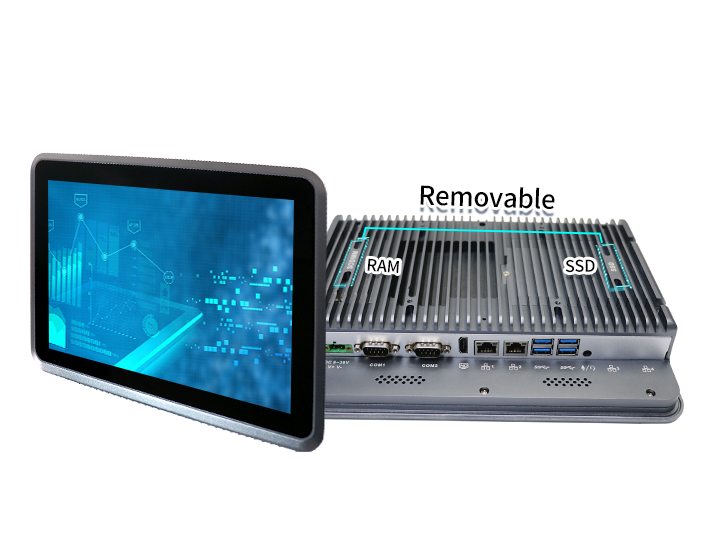
Industrial PC Definition: Rugged Design, Certifications, and Core Differentiators
What Is an Industrial PC? A Technical and Functional Definition
An industrial PC (IPC) is a purpose-built computing platform engineered to operate reliably in harsh environments—such as factory floors, outdoor installations, or transportation systems. Unlike consumer-grade computers, IPCs prioritize precision, durability, and continuous operation through military-grade components, fanless thermal management, industrial I/O, and extended 10–15 year lifecycles. They serve as control hubs for robotics, process monitoring, and real-time automation—designed for 24/7 uptime under extreme conditions including temperatures from –40°C to 85°C, constant vibration, and dust exposure.
Rugged Design Essentials: Fanless Cooling, Wide-Temperature Operation, and IP67/EN 50155 Compliance
Ruggedization centers on three interdependent design pillars:
- Fanless cooling, using passive heat sinks and conduction-based thermal management, eliminates moving parts to prevent dust ingress and ensure silent, maintenance-free operation.
- Wide-temperature components, including industrial SSDs and capacitors, sustain stable performance across –40°C to 85°C without throttling or failure.
- Certified structural integrity, validated by standards such as IP67 (dust-tight and submersible for 30 minutes) and EN 50155 (for shock, vibration, and electromagnetic resilience in rail applications), ensures operational reliability where commercial PCs fail. These features collectively prevent the majority of environmental failures common in industrial settings.
Why Certifications Matter: UL 61010, EN 50155, and IEC 60950-1 in Enterprise Deployment Contexts
Third-party certifications provide auditable assurance of safety, interoperability, and mission-critical readiness. UL 61010 validates electrical safety for use near high-voltage equipment; EN 50155 certifies mechanical robustness for mobile and rail environments; and IEC 60950-1 (now superseded by IEC 62368-1 for new designs) established foundational requirements for electromagnetic compatibility and insulation integrity. Enterprises require these certifications—not only for regulatory compliance but because certified IPCs reduce unplanned downtime by 63% compared to uncertified alternatives, making them indispensable near hazardous processes or critical infrastructure.
Reliability and Long Lifecycle: Minimizing Downtime and Total Cost of Ownership
Real-World Reliability: Failure Rate Data for Industrial PCs vs. Commercial PCs in Factory Environments
Industrial PCs consistently outperform commercial systems in real-world deployments. While commercial PCs suffer 15–25% annual failure rates in factory settings due to thermal stress, dust, and vibration, rugged IPCs maintain failure rates below 5%. This reliability stems from integrated design choices: fanless operation prevents particulate buildup, wide-temperature components avoid thermal derating, and reinforced chassis absorb mechanical shock. For example, automotive Tier-1 suppliers report 99.992% uptime with IPCs—just 42 minutes of unplanned downtime per year—versus 97.4% with commercial alternatives.
10–15-Year Lifecycle Support: How Extended Availability Reduces TCO by Up to 37% (ARC Advisory Group, 2023)
Extended lifecycle support is a defining economic advantage of industrial PCs. ARC Advisory Group’s 2023 analysis found enterprises deploying IPCs incur up to 37% lower total cost of ownership (TCO) than those replacing commercial PCs every 3–5 years. This reduction comes from eliminating recurring hardware refreshes, minimizing integration and revalidation costs, and avoiding production losses tied to unexpected failures. Long-term component availability also ensures backward compatibility with legacy automation systems while supporting phased adoption of IIoT and edge analytics—without forcing premature system-wide overhauls.
Operational Excellence: 24/7 Uptime, Low Maintenance, and Seamless Automation Integration
Continuous Operation in Critical Infrastructure: Case Study — Automotive Tier-1 Assembly Line (99.992% Uptime)
The 99.992% uptime achieved by IPCs on an automotive Tier-1 assembly line underscores their operational maturity. Over 18 months, this translated to just 42 minutes of unplanned downtime—enabled by fanless thermal design, vibration-resistant mounting, and tolerance for ambient fluctuations between –25°C and 70°C. Structural certifications like IP67 and EN 50155 further validate their ability to withstand the physical rigors of continuous manufacturing—far exceeding the design envelope of standard IT hardware.
Plug-and-Play Integration with PLCs, SCADA, and MES Systems
Industrial PCs deliver seamless interoperability across automation ecosystems, reducing integration time and cost by up to 40%. Native support for Modbus TCP, Profinet, EtherNet/IP, and OPC UA enables direct communication with PLCs, SCADA platforms, and MES without protocol gateways or middleware. Deterministic processing ensures real-time data exchange, while built-in OPC UA servers simplify secure, standardized data routing to cloud or on-premise analytics layers—accelerating deployment and enabling scalable, cell-level digitalization.
Strategic Enablement: Industrial PCs as Foundations for IIoT, Edge AI, and Digital Transformation
Industrial PCs serve as foundational edge platforms for digital transformation—bridging legacy automation with next-generation capabilities like IIoT, Edge AI, and predictive maintenance. Their rugged architecture, deterministic performance, and long-term support make them uniquely suited to drive innovation across manufacturing, logistics, and critical infrastructure.
Edge Intelligence Ready: Built-in I/O, GPU Options, and Real-Time OS Support for Predictive Maintenance
Modern IPCs are engineered for intelligent edge workloads. Key enablers include:
- Extensive I/O connectivity, with multiple USB, Gigabit Ethernet, serial, and CAN ports—plus optional IoT gateway functionality—to unify data streams from sensors, HMIs, and legacy equipment.
- GPU acceleration options, from integrated graphics to discrete NVIDIA or AMD modules, power real-time video analytics, visual inspection, and AI inference at the edge.
- Real-time OS support, including Linux RT, VxWorks, and Windows IoT Enterprise with real-time extensions, ensures microsecond-level determinism for time-critical predictive maintenance algorithms—analyzing vibration, thermal, and acoustic signatures to forecast failures before they impact production.
Modular Scalability and Legacy System Bridging: Protecting Investment Across Technology Generations
IPCs protect capital investments through intentional modularity and standards-based design:
- Backward compatibility with legacy fieldbuses (e.g., Profibus, DeviceNet) and industrial protocols allows integration with existing PLCs, SCADA, and MES—avoiding costly rip-and-replace upgrades.
- Scalable architecture, featuring swappable compute modules, expandable memory, and hot-swappable I/O cards, supports phased capability enhancements—such as adding AI inference or 5G connectivity—without full system replacement.
- Future-proofing is ensured through adherence to open standards (IEC 61131-3, OPC UA, Time-Sensitive Networking) and long-term component availability—backed by industry-leading 10+ year lifecycle commitments that mitigate obsolescence risk and sustain TCO advantages.
Table of Contents
- Industrial PC Definition: Rugged Design, Certifications, and Core Differentiators
- Reliability and Long Lifecycle: Minimizing Downtime and Total Cost of Ownership
- Operational Excellence: 24/7 Uptime, Low Maintenance, and Seamless Automation Integration
- Strategic Enablement: Industrial PCs as Foundations for IIoT, Edge AI, and Digital Transformation