 EN
EN

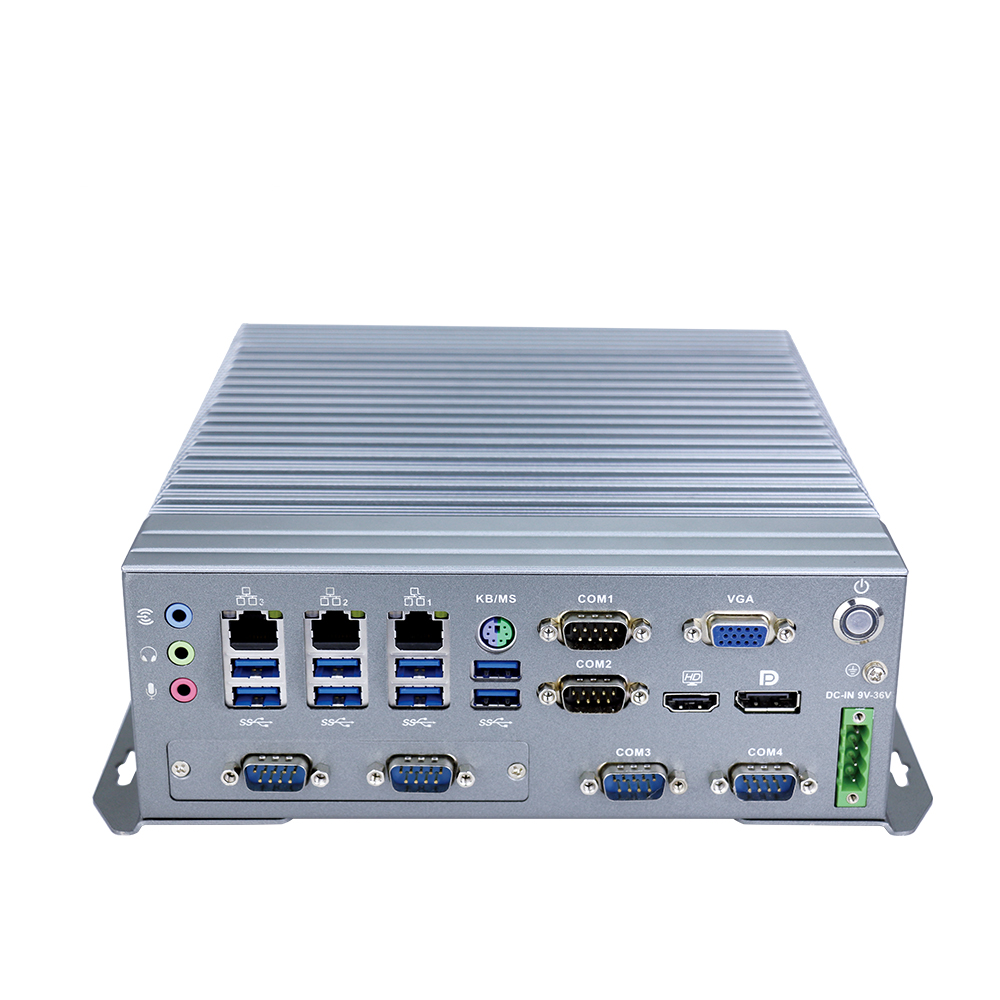
Ruggedness and Reliability: Built for Industrial Durability
Fanless Design and Wide Temperature Operation (-40°C to 85°C)
Embedded computer systems get rid of those delicate moving components we see in regular equipment, especially things like fans that let dust in and eventually break down when exposed to tough conditions on factory floors. These machines are built using solid state tech that works well from really cold temperatures all the way up to super hot ones, roughly between minus 40 degrees Celsius and plus 85. That makes them perfect for places where it gets extremely hot or freezing cold, think about shipping containers in polar regions or inside metalworking plants where heat is constant. The ability to handle these temperature extremes means parts don't wear out as fast and there's less unexpected breakdowns. And this matters a lot because when production stops unexpectedly, factories lose around seven hundred forty thousand dollars each year according to research from Ponemon Institute back in 2023. Special memory chips rated for wide temperature ranges combined with protective coatings on circuits help maintain consistent operation even after going through many cycles of heating and cooling. For installations packed tightly into control panels where air doesn't circulate properly, these fanless models last almost twice as long before needing repairs compared to older technology options, standing at about 68 percent improvement in reliability metrics like Mean Time Between Failures according to IndustrialTech reports from last year.
IP67 and EN50155 Certification for Shock, Vibration, and Dust Resistance
IP67 and EN50155 certifications serve as concrete proof that equipment can handle tough conditions found in actual industrial settings. The IP67 rating means complete dust protection plus the ability to survive being submerged in water for 30 minutes at depths up to one meter. This makes it particularly suitable for places like food processing plants where frequent cleaning happens, outdoor installations exposed to weather, or areas requiring regular washdowns. Then there's EN50155, which is specifically designed for the railway sector. It requires components to withstand shocks of up to 50G and ongoing vibrations reaching 5Grms. Such specs ensure these parts work reliably inside mining trucks, trains, and other types of mobile machinery. The testing process itself involves subjecting equipment to more than 100 hours of mixed vibration patterns that mimic what happens on rough roads and tracks. Equipment certified under both standards typically sees around 45% reduction in maintenance expenses according to IndustryTech research from 2024. Plus, they stop tiny particles from getting in, sometimes even those smaller than a micron in size.
Real-Time Performance: Deterministic Control for Critical Automation
Embedded computers deliver deterministic real-time control—essential for industrial automation where microsecond-level timing prevents catastrophic failures in high-speed systems. Unlike general-purpose platforms, these devices use purpose-built architectures to guarantee predictable, jitter-free responses to time-critical events.
Sub-10µs Latency via RTOS Integration and Hardware Timestamping
When industrial embedded computers combine Real-Time Operating Systems (RTOS) with special hardware timestamping components, they can reach latencies below 10 microseconds. That's roughly 20 times quicker compared to standard PLC systems. The improved accuracy removes those annoying timing gaps in critical safety operations such as emergency shutdown procedures. We're talking about situations where just a few milliseconds delay could lead to serious equipment problems costing upwards of half a million dollars according to industry standards from 2023. With deterministic execution, safety interrupts will consistently take priority over regular background processes within clearly defined time frames that are actually guaranteed to work every single time.
Precision I/O Synchronization for Robotics, AGVs, and Motion Control
When hardware synchronized I/O is used, it allows for really tight coordination between multiple axes in various applications like robotics, AGVs, and those precision motion control systems we see everywhere now. Take robotic welding arms as an example. These machines need to keep the welding arc stable, which they do by aligning voltage and current signals with microsecond precision across over 32 channels at once. This has actually cut down on material waste quite a bit in car factories, around 18 percent according to industry reports. And what about those fast-moving conveyor belts? The same kind of synchronization stops those little positioning errors from adding up over time. Some systems can handle upwards of 1,200 items every single minute without missing a beat thanks to this technology.
Seamless IIoT and Edge AI Enablement
Native Support for OPC UA, MQTT, and TSMP — Plus Onboard AI Acceleration (NPU/Movidius)
Industrial automation these days needs protocols built right in along with smart processing at the local level. The latest embedded systems actually have OPC UA, MQTT, and TSMP baked into their firmware from day one. What does that mean? Machines can talk to each other securely and quickly without needing all those extra layers of software in between. The whole system works better when sensors, PLCs, and even cloud services can share information instantly. This kind of seamless connection makes predictive maintenance possible and gives companies a clear view across their entire supply chain operations. Manufacturers are starting to see how these improvements translate to fewer breakdowns and better inventory management down the line.
Complementing this connectivity, onboard neural processing units (NPUs)—such as Intel Movidius VPUs—execute AI inference at the edge. Vision analytics, acoustic anomaly detection, and inline quality control algorithms run locally, eliminating cloud dependency. Key advantages include:
- Sub-100ms decision latency, enabling immediate response to production anomalies
- 30% lower bandwidth costs, achieved by filtering irrelevant sensor data before transmission
- Offline operational resilience, sustaining functionality in remote or intermittently connected locations
By unifying IIoT protocols with edge-optimized AI acceleration, the embedded computer functions as an intelligent gateway—transforming raw sensor inputs into actionable insights directly at the point of origin. This convergence ensures systems operate with deterministic responsiveness while adapting dynamically to evolving production requirements.
Future-Proof Flexibility: Modular Design and Long-Term Embedded Support
Expandable I/O (CANbus, M.2, Mini PCIe) and 15+ Year Product Roadmaps
The world of industrial operations needs computing systems that can keep up with all sorts of changes in requirements over time. That's where modular designs come into play. These setups let companies expand their capabilities through standard connection points. Think about things like CANbus when dealing with factory networks, M.2 slots for faster storage options, and those Mini-PCIe connectors which open doors to wireless capabilities or special input/output functions. The beauty here is being able to plug in new sensor types, different fieldbus systems, or updated communication methods without tearing everything apart and starting from scratch. Many manufacturers have found this approach saves them tons of money and downtime compared to replacing entire systems just because technology advances.
Long-term availability matters just as much. Product roadmaps that stretch over 15 years or more mean companies can keep getting compatible parts without facing expensive requalification headaches during infrastructure upgrades. Think about it this way: when old systems need updating, having access to matching components saves time and money. The real benefit comes from how these roadmaps turn what would normally be big ticket expenses into smart long-range investments. Companies report saving around 40% on overall costs compared to regular industrial computers because they can upgrade piece by piece instead of replacing entire systems all at once. This approach makes budget planning easier and reduces waste in the process.
Industrial Embedded Computers FAQ
What is the advantage of a fanless design in industrial environments?
Fanless designs eliminate the need for moving parts that can collect dust and break down, extending the durability and lifespan of the equipment in harsh conditions.
What does IP67 certification mean?
IP67 certification indicates that equipment is completely protected from dust intrusion and can withstand being submerged in water up to one meter for 30 minutes.
How does deterministic real-time control benefit industrial processes?
Deterministic real-time control ensures microsecond-level timing precision, preventing failures in high-speed systems and maintaining operational reliability.
Why is edge AI important in industrial settings?
Edge AI processes data locally, reducing latency and bandwidth costs, while maintaining operations in remote or intermittently connected locations.