 EN
EN

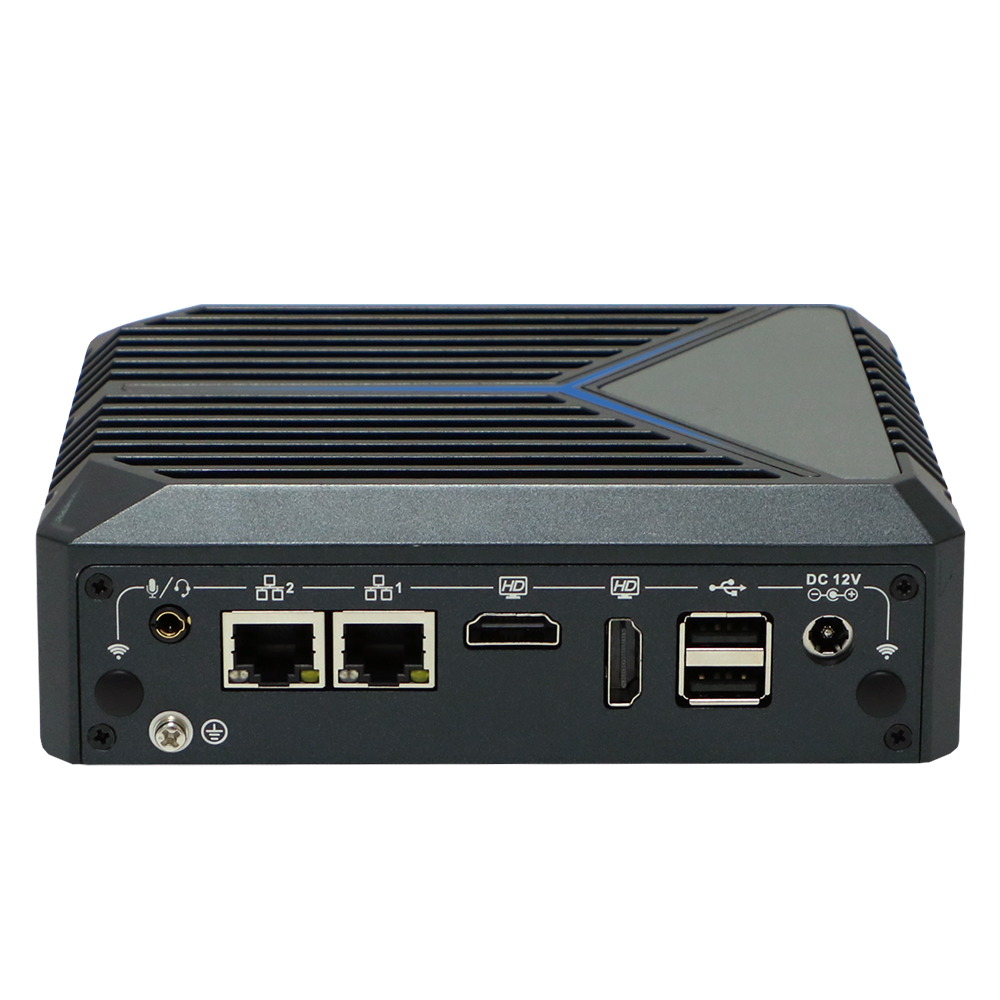
Fanless Mini PC Reliability in High-Vibration Mobile Environments
Elimination of moving parts prevents mechanical failure under constant shock and vibration
Regular desktop computers just don't cut it in vehicle environments because their fan bearings simply wear out too fast when exposed to constant road vibrations. The fanless mini PC approach fixes this problem completely by getting rid of all those moving parts altogether. Instead of relying on fans, these devices use copper heat pipes and aluminum casings for solid state cooling that conducts heat away without any mechanical components involved. What makes them so reliable is how well they handle the daily punishment from bumpy roads, deep potholes, and the relentless shaking from engines that would eventually break down standard computer systems. For law enforcement officers patrolling city streets, delivery drivers making rounds across town, or construction workers operating heavy machinery, having a computer that keeps running nonstop means the difference between getting the job done right on time versus facing costly delays and equipment failures.
MIL-STD-810G validation: Real-world durability across buses, trains, and emergency vehicles
MIL-STD-810G certification confirms that fanless mini PCs endure the extreme vibration profiles encountered in real-world transit environments. Validated units maintain structural and functional integrity across diverse use cases:
| Vehicle Type | Vibration Challenge | Performance Outcome |
|---|---|---|
| Emergency Vehicles | Siren resonance & high-speed G-force | Zero component displacement |
| Mass Transit | Rail track harmonics & braking | No data interruption |
| Heavy Trucks | Off-road impacts & engine rumble | Consistent 24/7 operation |
This military-grade validation eliminates maintenance attributable to vibration-induced failures—proven across thousands of fleet deployments in rail, public transit, and first-responder applications.
Passive Thermal Management for Extreme Temperature Operation
Stable performance from -25°C to +70°C without active cooling or thermal throttling
Mini PCs without fans can handle serious temperature extremes, working just fine whether deployed in freezing Arctic conditions at minus 25 degrees Celsius or inside hot engine compartments reaching up to 70 degrees Celsius. These devices depend solely on passive cooling methods instead of traditional fans. The heat gets pulled away from important parts using copper pipes and then spread out across the aluminum body which acts like a built-in radiator. Traditional cooling systems with fans tend to get blocked by dust and sometimes overheat completely, but fanless designs avoid these problems entirely. No slowdowns happen here, so telematics data keeps flowing smoothly, GPS tracking remains accurate, and live video analysis works properly even when temperatures swing wildly back and forth throughout the day.
Field-proven thermal resilience across 12,000+ vehicle-mounted deployments
Real-world validation spans over 12,000 deployments in mass transit, emergency response, and logistics fleets operating under sustained thermal stress:
- Public buses in tropical climates achieve 99.4% uptime after 18 months of continuous operation
- Refrigerated transport units maintain data logging integrity across -20°C to +65°C transitions
- Mining vehicles operate reliably despite thermal cycling exceeding standard industrial shock thresholds
This scale of deployment confirms that fanless architecture delivers consistent thermal resilience where active cooling fails—no t just in lab conditions, but across global operational environments.
Compact, Mounting-Optimized Design for Space-Limited Vehicle Integration
DIN-rail, anti-vibration bracket, and panel-mount compatibility for rail, fleet, and defense vehicles
Fanless mini PCs work great in those tight spots where space matters most in vehicles. They come with DIN rail mounts so they fit right into train control panels and factory equipment. There's also panel mount versions that sit flush against dashboards, plus special brackets designed to handle vibrations from rough terrain driving, which makes them essential for military vehicles and rescue operations. The mounting options cut down on all that extra hardware that usually takes up so much room, shrinking the overall size by about 60% compared to regular desktop computers. Everything gets packed into one tough case that handles computing tasks, connects inputs/outputs, and delivers power too. This means fewer cables cluttering up cramped areas like under the hood or inside driver compartments while still leaving enough space for people to move around comfortably during maintenance checks or when loading cargo.
Long-Term Uptime and Environmental Resilience in Harsh Operational Conditions
Mini PCs without fans are extremely reliable when mounted in vehicles because they get rid of parts that tend to fail easily like fans which can't handle dust getting inside, moisture problems, or wear and tear from constant movement. These devices use passive cooling so they work well even in temperatures ranging from minus 25 degrees Celsius all the way up to plus 70 degrees. Plus, their construction meets MIL-STD-810G standards for resisting vibrations, making them perform reliably even during rough rides. Real world testing has shown that such systems stay online about 99.9% of the time in buses and ambulances. When something goes down unexpectedly in these critical operations, it costs around seven hundred forty thousand dollars each year according to research from Ponemon Institute back in 2023. The tough outer casings also stand up against dampness, rust, and electrical noise, allowing these machines to run continuously with minimal need for maintenance. For many transportation companies, having dependable equipment simply isn't just nice to have anymore its absolutely necessary.
FAQ Section
Why are fanless mini PCs ideal for high-vibration environments?
Fanless mini PCs are ideal for high-vibration environments because they have no moving parts, which eliminates mechanical failures due to constant shock and vibration.
What is MIL-STD-810G validation?
MIL-STD-810G validation is a certification process that ensures fanless mini PCs can withstand extreme vibration profiles in real-world transit environments.
How do fanless mini PCs manage extreme temperatures?
Fanless mini PCs rely on passive cooling methods, utilizing copper pipes and aluminum bodies to manage heat without relying on active cooling, allowing stable performance from -25°C to +70°C.
What are the mounting options for fanless mini PCs in vehicles?
Fanless mini PCs offer DIN rail mounts, panel mounts, and anti-vibration brackets for easy integration in space-limited vehicle environments.