 EN
EN

Why Traditional Defenses Are No Longer Enough
Let's be honest about something. The way we used to protect our networks just does not cut it anymore. A few years back, having a basic firewall and maybe some antivirus software felt like enough. But today? Cybercriminals have gotten way smarter, and the threats keep evolving faster than most businesses can keep up. We are talking about ransomware attacks that can shut down an entire hospital, phishing schemes that trick even tech savvy employees, and zero day exploits that nobody saw coming. The network security market is projected to approach 29 billion dollars in 2026, driven by cloud workload adoption and sustained demand for application layer protections. That tells you everything about how serious this has become.
The thing is, a lot of companies still think they can get by with software based firewalls running on their existing servers. And sure, that works for basic protection. But when you are dealing with the kind of traffic volumes and sophisticated attacks we see in 2025, you really need dedicated hardware that is built specifically for this job. Firewall appliances act as the first line of defense against all sorts of cyber threats like DDoS attacks, malware infections, and people trying to get in where they do not belong. They sit right at the edge of your network and check every single data packet that comes through, deciding what gets in and what gets blocked.
What Makes a Firewall Appliance Different from Software
Here is the big distinction that a lot of people miss. Software firewalls run on the same hardware that is already doing other things for your business. That means they are sharing processing power, memory, and network bandwidth with whatever else that machine is handling. And when you get hit with a big traffic spike or an attack, that firewall suddenly needs all the resources it can get, but they are not available because something else is using them.
Hardware firewall appliances are dedicated devices designed specifically for managing network traffic. They have their own processors, their own memory, and their own network interfaces, all optimized for one job and one job only. Keeping bad stuff out and letting good stuff through. This matters because when a cyber attack happens, every millisecond counts. A dedicated appliance can inspect packets, block threats, and keep your network running without breaking a sweat, while a software firewall on an overloaded server might just freeze up or crash entirely.
Another thing worth mentioning is the reliability factor. Hardware firewalls typically outperform software alternatives. They are built with industrial grade components that can run 24/7 without overheating or failing. Many of them use fanless designs too, which means fewer moving parts that can break down over time. When your entire business depends on keeping that network connection secure, you really cannot afford to have your firewall go down because of a hardware failure.
The Real World Benefits You Actually Notice
Okay, let us talk about what this actually looks like in practice. Because the technical specs are one thing, but the day to day experience is what really matters to business owners and IT managers.
First off, performance. A good firewall appliance handles high traffic volumes and complex filtering rules much more efficiently than software alternatives. That means your employees do not experience slowdowns when they are trying to access critical applications. Your video conferences do not stutter. Your cloud based tools do not timeout. Everything just works, while the firewall quietly does its job in the background.
Then there is the management side of things. With a dedicated appliance, you get centralized management tools that let you see exactly what is happening on your network at any given time. You can set up security policies, monitor traffic patterns, and respond to threats from a single dashboard. Compare that to managing software firewalls across multiple servers and workstations, each with its own configuration and its own quirks. It is night and day.
The market is moving toward centralized orchestration, interoperability, and AI powered automation, driven by growing hybrid environments and the explosion of new threat vectors. Firewall appliances are at the center of this shift. They integrate with other security tools, they learn from past attacks, and they adapt to new threats without requiring constant manual intervention.
And let us not forget about compliance. If your business handles sensitive data, whether it is customer credit cards, patient records, or proprietary business information, you probably have regulatory requirements to meet. Firewall appliances help maintain the core security principles of confidentiality, integrity, and availability. They encrypt important data as it moves across networks using secure VPN connections, they check packets to make sure nothing has been altered, and they make sure critical business applications get priority access when there are sudden traffic surges.
Where Things Are Headed in 2025 and Beyond
The firewall landscape is changing fast, and the devices we are seeing today are nothing like what was available even a couple of years ago. Hybrid firewalls are becoming the center of gravity in the broader network security market, integrating broadly with other first party and third party tools, including endpoint products, data security products, and SASE platforms.
What does that mean for you? It means your firewall appliance is no longer just a firewall. It is becoming a security platform that connects with everything else you are using to protect your business. It works with your endpoint protection, your data security tools, and your cloud based security services to create a unified defense system.
AI and machine learning are also becoming standard features in modern firewall appliances. These systems learn from past attacks and improve their ability to detect new threats over time. Instead of just following a set of rules that someone programmed in, they actually get smarter the more they work. That proactive approach increases the overall security posture while reducing the load on IT teams, who can now concentrate on strategic initiatives instead of constantly fighting fires.
Another trend worth watching is the move toward zero trust architecture. Network firewalls need to evolve alongside the zero trust security approach and secure access service edge frameworks. That means your firewall appliance has to do more than just block traffic at the perimeter. It has to verify every request, every user, and every device, no matter where they are coming from. This requires higher performance, faster encryption, and better integration with identity management systems.
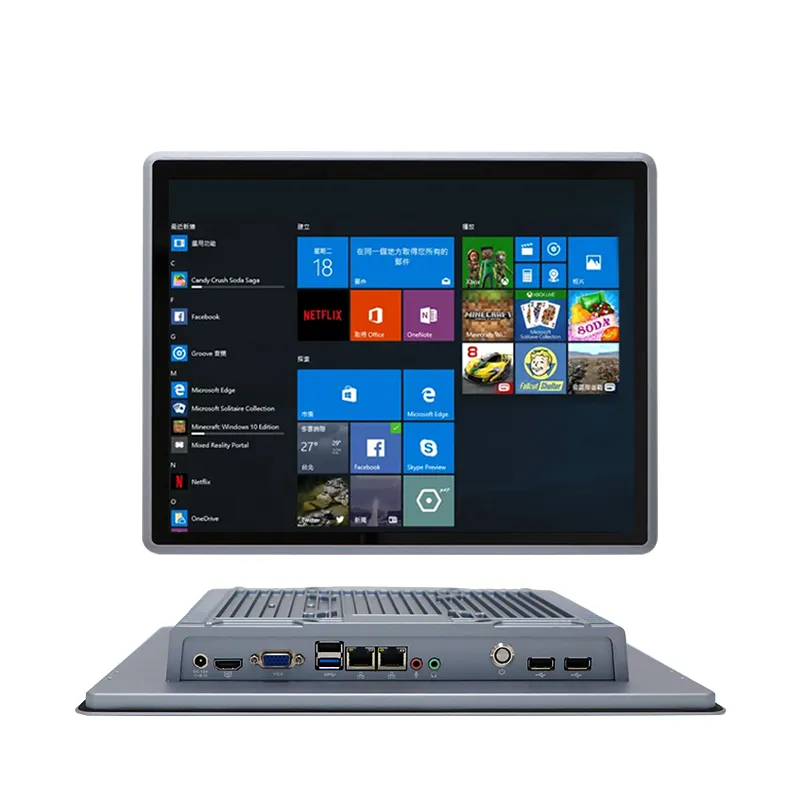
For businesses that are serious about network security in 2025, investing in a quality firewall appliance is not optional. It is essential. XS offers a range of firewall appliances designed to meet the needs of businesses at every scale, from compact micro firewalls for small offices to high performance rackmount systems for enterprise environments. These devices are built with the latest processors, multiple network ports, and fanless cooling systems that ensure reliable operation around the clock. Whether you are protecting a handful of computers or a complex multi site network, there is a solution that fits.