 EN
EN

The Clinical Reality That Demands Better Tools
Walk into any modern hospital ward or intensive care unit, and you will see how much things have changed. The old days of paper charts and clipboards are fading fast. Today, healthcare professionals need instant access to patient records, real time vitals, and diagnostic images, all while keeping their hands free to actually care for people. That is a lot to ask from traditional desktop computers or consumer tablets that were never built for this kind of pressure.
The thing is, hospitals are not like regular offices. You have got bright overhead lights, constant movement, people rushing around, and equipment that needs to be wiped down with strong disinfectants multiple times a day. Regular computers just cannot handle that kind of treatment. They break down, they overheat, they collect dust and germs in their vents, and they become a headache for IT staff who are already stretched thin. This is where medical panel PCs come into the picture, and honestly, they are changing the game in ways that go way beyond just having a screen on a wall.
Built for the Chaos: Design That Actually Makes Sense
When you look at a medical panel PC, the first thing you notice is that it does not look like a regular computer. And that is intentional. These devices are built from the ground up for healthcare settings, with features that directly address the unique challenges of clinical environments.
Take the fanless design, for example. Most regular computers have fans to keep them cool, but those fans pull in dust and airborne particles. In a hospital, that is a big problem because it can spread germs and make equipment harder to clean. A fanless medical panel PC eliminates that issue entirely. No moving parts means less dust circulation, quieter operation, and fewer things that can break. Nurses and doctors can actually hear themselves think, and patients get a more peaceful environment to rest in.
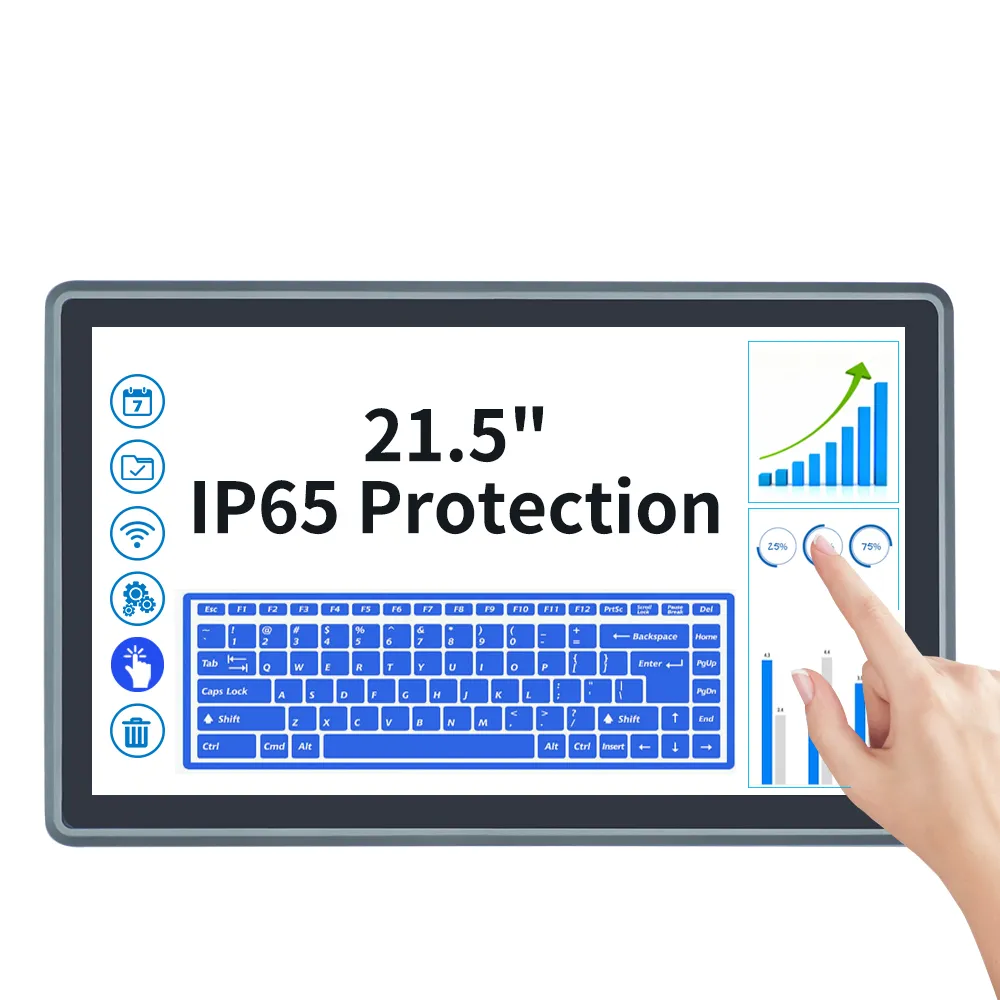
Then there is the IP65 rating on the front panel. This is basically a fancy way of saying the screen can handle being sprayed with liquid and wiped down repeatedly without damage. In a world where infection control is absolutely critical, being able to sanitize equipment quickly and effectively is non-negotiable. Medical panel PCs are designed with smooth, flat surfaces that do not have cracks or crevices where bacteria can hide. Some even come with antimicrobial coatings that add an extra layer of protection. You can clean them with alcohol, bleach wipes, or whatever your hospital's protocol requires, and they just keep working.
Another thing that really stands out is the display quality. Healthcare environments are notorious for harsh lighting. Overhead fluorescent lights, bright surgical lamps, sunlight streaming through windows. Regular screens wash out and become impossible to read. But medical panel PCs are built with high brightness and high contrast displays that stay visible even in the toughest lighting conditions. Doctors can look at X-rays, MRI scans, and patient charts with clarity and precision, which matters a lot when you are making life or death decisions.
And let us talk about touchscreens for a second. These are not your average smartphone screens. Medical panel PCs use capacitive touch technology that works even when you are wearing medical gloves. Think about that for a moment. A surgeon in the middle of a procedure, wearing sterile gloves, can still pull up patient data, adjust settings, or consult imaging without having to take their gloves off or ask someone else to do it for them. That is not just convenient. That is a workflow game changer.
Where These Machines Actually Make a Difference
Okay, so we have talked about the design and the features. But where do these medical panel PCs actually get used? The answer is pretty much everywhere in a healthcare facility, and each setting has its own specific needs.
At the patient bedside, these devices serve as the central hub for care delivery. Nurses can chart vitals, administer medications, and update care plans without ever leaving the patient's side. Doctors can review test results, pull up medical histories, and have informed conversations with patients and families right there in the room. This point of care computing reduces errors, speeds up decision making, and most importantly, gives clinicians more time to actually interact with patients instead of staring at a computer screen somewhere else.
In operating rooms, things get even more intense. Surgical teams need reliable, instantly accessible information while they are working under extreme pressure. Medical panel PCs can display real time patient data, imaging, and surgical guides right where the team needs to see them. The fanless design keeps things quiet, and the sealed construction means they can be cleaned thoroughly between procedures. Some models are even designed to be mounted on arms or booms so they can be positioned exactly where the surgeon needs them without taking up valuable floor space.
Diagnostic imaging departments rely heavily on these devices too. Radiologists and other specialists need screens that can display medical images with high fidelity and accurate color reproduction. The high brightness displays on medical panel PCs ensure that even subtle details in X-rays, CT scans, and MRIs are visible and clear. That can make the difference between catching something early and missing it entirely.
Then there are the less obvious but equally important places. Nurse stations, medication rooms, admission desks, and even waiting areas all benefit from having reliable, easy to use computing devices. Medical panel PCs are used for everything from patient registration and scheduling to telemedicine consultations and remote monitoring. In emergency departments, where every second counts, having a durable, responsive device that just works is absolutely essential.
What is really interesting is how these devices are enabling new models of care. Telemedicine, for example, has exploded in recent years, and medical panel PCs are playing a big role in making it work. They provide the stable, high quality video and data connections that doctors and patients need for remote consultations. They integrate with electronic health records and other hospital systems so that everyone involved in a patient's care has access to the same up to date information. This kind of connectivity and integration is helping to break down silos and create a more coordinated, patient centered approach to healthcare.
What the Future Looks Like for Medical Computing
If you think medical panel PCs are impressive now, just wait. The technology is evolving fast, and the next generation of these devices is going to be even more powerful and more integrated into the healthcare ecosystem.
One of the biggest trends is the move toward AI and machine learning capabilities being built directly into these devices. Imagine a medical panel PC that can analyze imaging data in real time and flag potential issues for the radiologist to review. Or one that can predict patient deterioration based on vital sign trends and alert the care team before a crisis occurs. These are not science fiction scenarios. They are already starting to happen, and the hardware needs to be ready to support these advanced workloads.
Another area of development is in connectivity and interoperability. Healthcare is becoming more and more data driven, and medical panel PCs are becoming the central nodes in that data network. They need to connect seamlessly with everything from wearable patient monitors to hospital information systems to cloud based analytics platforms. This requires robust networking capabilities, strong security features, and the flexibility to adapt to changing technology standards.
Security is also going to be a huge focus going forward. Healthcare data is some of the most sensitive and valuable information out there, and cyber attacks on hospitals are becoming more common. Medical panel PCs need to be secure by design, with features like TPM security encryption, secure boot, and the ability to integrate with enterprise security frameworks. As more devices become connected, protecting patient data and ensuring system integrity becomes even more critical.
We are also going to see more specialization in medical panel PCs. Different clinical settings have different needs, and manufacturers are responding with purpose built devices for specific applications. There are panel PCs designed specifically for operating rooms, others optimized for bedside use, and still others built for mobile carts that can be moved from room to room. This trend toward specialization is going to continue as healthcare providers demand more tailored solutions.
And let us not forget about the human factor. The best technology in the world is useless if people do not want to use it. Future medical panel PCs are going to be even more intuitive and user friendly, with interfaces that are designed around clinical workflows rather than forcing clinicians to adapt to the technology. Multi touch capabilities, gesture controls, and voice activated features are all on the horizon, making these devices even more natural and effortless to use.
At the end of the day, medical panel PCs are not just about having a computer in a hospital room. They are about creating an environment where technology supports and enhances the work of healthcare professionals rather than getting in their way. They are about giving clinicians the tools they need to provide the best possible care, when and where it matters most. And as someone who has seen the difference these devices can make, I can tell you that the impact is real and it is only going to grow.
Whether it is a busy emergency department, a quiet intensive care unit, or a cutting edge operating room, medical panel PCs are becoming an indispensable part of modern healthcare. They are reliable, they are hygienic, they are powerful, and they are designed specifically for the unique demands of clinical environments. XS, like many other companies in this space, continues to push the boundaries of what these devices can do, and the future looks incredibly bright for medical computing.