 EN
EN

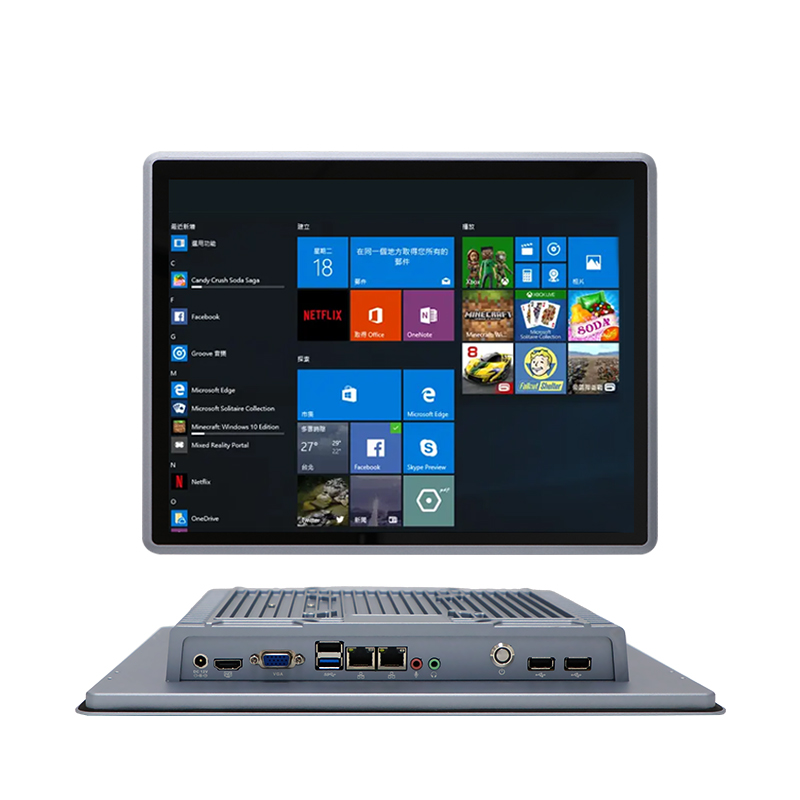
Understanding the Industrial PC I7 Architecture and Performance Capabilities
Intel® Core™ i7 Processors in Industrial Computers: Power Meets Efficiency
Intel's industrial grade Core i7 processors strike a good balance between raw computing power and how much electricity they consume, which is why many manufacturers rely on them for tough tasks. Most models come with somewhere between six and eight processor cores, run at least 2.6 GHz when idle, and have that Turbo Boost thing that kicks in during sudden spikes in workload demand. What sets these apart from regular consumer versions? They're built to keep performing consistently even after running nonstop for hours on end. That matters a lot in situations where machines need to process data constantly without slowing down, like when factories run simulations while production lines operate, or when cameras analyze footage in real time across multiple locations simultaneously.
Performance Metrics: CPU Speed, Core Count, and Thermal Design Power (TDP)
Three key metrics define industrial i7 performance:
| Metric | Industrial PC i7 | Consumer i7 |
|---|---|---|
| Avg. Base Clock | 2.8–3.4 GHz | 2.4–3.0 GHz |
| Core Count | 6–8 cores (hyperthreading supported) | 4–6 cores |
| Typical TDP Range | 45–65W | 35–45W |
The higher TDP in industrial systems supports prolonged multi-threaded processing, while consumer CPUs often throttle under sustained thermal stress (Ponemon 2023).
Industrial PC I7 vs. Consumer-Grade Systems: Why Reliability Matters in Heavy Computing
Industrial PC i7 systems are designed to run nonstop even when conditions get tough. They come with MIL-STD-810G ratings that protect against shocks and vibrations, plus they work reliably across temperatures from -20 degrees Celsius all the way up to 60 degrees. Consumer grade computers just don't cut it in these situations. Most regular desktops don't have proper IP65 or NEMA 4 protection against dust and water intrusion, which explains why they tend to break down about three times quicker in factory floors according to a study by Ponemon back in 2023. The dependable performance makes all the difference when companies need to keep those predictive maintenance programs running smoothly or maintain continuous operation of critical control systems throughout shifts without unexpected downtime.
Rugged Design and Environmental Resilience of Industrial PC I7
Fanless Cooling Technology: Sustaining Performance Without Compromising Durability
The fanless cooling design in industrial PC i7 systems gets rid of those pesky moving parts that tend to collect dust and break down over time. These systems rely on advanced heat sinks along with conduction based cooling methods to keep things running smoothly. The processors stay stable even when temperatures swing wildly between -40 degrees Celsius and 70 degrees Celsius. That means they can maintain their 2.9 GHz base speed consistently, which matters a lot in places where dust is everywhere such as metal fabrication shops or food production areas. No need for constant maintenance or worrying about overheating issues in these tough environments.
Shock, Vibration, Dust, and Extreme Temperature Resistance
Ruggedized enclosures withstand up to 50G operational shock and 5Grms vibration loads, verified through MIL-STD-810H certification. Circuit boards are protected with three-layer conformal coatings to resist humidity-induced corrosion, while anti-fungal treatments prevent biological growth in tropical conditions.
IP65/NEMA 4 Ratings: Sealing Standards for Harsh Industrial Environments
Pressurized aluminum housings achieve IP65 dust-tight sealing and NEMA 4 water resistance, effectively blocking contaminants such as oil mist and silica particles. Field data from steel mills show these systems experience 92% fewer failures than consumer-grade computers when exposed to 95% non-condensing humidity and 0.5g/m³ particulate levels.
Optimizing Industrial PC I7 for Real-Time Simulation and Control Systems
Real-Time Processing for Industrial Automation and Simulation Workloads
The latest Industrial PC i7 platforms can hit response times under a millisecond for automation work thanks to those powerful quad-core Intel processors plus some smart virtualization tech built right into the hardware. Recent tests from 2025 showed these systems maintain rock solid performance throughout long production runs, handling as many as 32 input/output signals at once while keeping latency below half a microsecond. What does this mean? For manufacturers running complex operations, it means they can conduct precise hardware-in-the-loop testing on things like robotic arms and CNC machines without worrying about signal loss or timing issues that might throw off production quality. The level of control these platforms offer is pretty remarkable when looking at how critical timing is in modern manufacturing environments.
Case Study: Process Control in Smart Manufacturing Using Industrial PC I7
A tier-1 automotive supplier reduced hydraulic press calibration errors by 42% after deploying industrial PC i7 units equipped with dual 2.5G Ethernet ports. The system managed 14 pressure sensors and 8 servo drives concurrently while maintaining 0.8ms cycle times—a 58% improvement over legacy controllers.
Reducing Latency and Ensuring Deterministic Response in Critical Applications
Engineers need real time responsiveness for critical applications, so they often use core pinning techniques to keep important tasks running on specific CPU cores. They also apply those special Preempt RT kernel patches which cut down interrupt latency right around 9 microseconds. And let's not forget about DDR4 3200 ECC memory that helps speed things up when accessing data. All these tweaks make sure the system can respond within fractions of a millisecond. Think about what this means for actual applications: controlling nuclear reactors where timing is everything, or aircraft brakes that must engage instantly during emergencies. The difference between proper function and catastrophic failure literally depends on getting those milliseconds right.
Emerging Trend: Running AI-Based Predictive Control Models on i7-Powered Edge Devices
Manufacturers now deploy industrial PC i7 systems at the edge to run TensorFlow-based predictive models locally. At a chemical plant, an onboard AI model predicted pump failures 12 hours in advance with 91% accuracy, cutting unplanned downtime by 67% (McKinsey 2024).
Leveraging Industrial PC I7 for Data-Intensive Surveillance and Security Processing
Video Analytics at the Edge: Harnessing i7 Power for Real-Time Insights
Industrial PCs with i7 chips handle high res video processing right at the edge, capable of managing around 16 simultaneous 4K streams thanks to those powerful Intel Core i7 processors inside. The quad core setup combined with Turbo Boost tech makes it possible to spot objects, read license plates, and catch anomalies in real time without needing to connect back to the cloud network. This works great for places where internet access might be spotty or non existent. Some research from last year showed these i7 based edge devices cut down on data lag times by nearly two thirds when compared against traditional central server approaches.
Multi-Camera Stream Processing and Instant Threat Detection
Industrial PC i7 units come with GPU acceleration that lets them handle H.265 video feeds from around 32 cameras at once, all while keeping threat detection responses below 50 milliseconds. What makes this possible? A 12MB Smart Cache that keeps things running smoothly even when processing peaks hit their maximum. And let's not forget about power efficiency either since these systems are designed to keep going without interruption. For companies dealing with security threats on a daily basis, every second counts. Research shows that delays in alerting can actually cost businesses approximately $740,000 for each breach according to Ponemon Institute data from last year. That kind of money adds up fast if systems aren't performing optimally.
Scalable Security Deployments: From Single Units to Networked Industrial Systems
Industrial PCs with i7 processors work really well across different scales, going from simple monitoring setups all the way up to full company networks. These systems come equipped with PCIe Gen4 and 2.5G Ethernet connections which makes them fit right into modern industrial security setups. They can handle processing over 1TB worth of surveillance footage each day while keeping everything secure with top notch encryption methods similar to what's used in defense applications. Looking at recent installations, factories using these i7 powered systems saw their ability to respond to threats go up around 38%. This happens because they spread out the AI analysis across multiple points throughout the facility rather than relying on one central system.
System Configuration and Optimization Strategies for Maximum Performance
Industrial PC i7 systems reach peak performance through strategic component selection and thermal design. By pairing high-speed memory, fast storage, and robust cooling, these systems maintain stability and throughput under continuous industrial loads.
Memory, Storage, and GPU Pairing: Building a High-Performance Industrial Workstation
Optimal configurations include 64GB DDR4 ECC RAM and PCIe 4.0 NVMe SSDs, which reduce data latency by 38% compared to SATA drives (industrial automation benchmarks 2023). Industrial-grade GPUs with 8GB VRAM support parallel simulation processing and operate reliably from -40°C to 85°C, matching the environmental tolerance of the host system.
Thermal Management and Safe Overclocking in Fanless Industrial Enclosures
Copper heat pipe solutions sustainably dissipate up to 95W of thermal load, allowing for a safe 15% CPU overclock without throttling. Vapor chamber cooling achieves junction temperatures 22°C lower than traditional heatsinks in high-vibration environments, preserving long-term reliability.
Performance Gains from SSD and RAM Upgrades: Benchmark Evidence
Field tests confirm that upgrading to Gen4 SSDs improves dataset access speed by 50% versus Gen3 models. Doubling RAM from 32GB to 64GB reduces render times by 41% in CAD simulations, while ECC memory cuts critical system failures by 91% during continuous operation.
FAQ
What makes Industrial PC i7 different from consumer-grade systems?
Industrial PC i7 systems are designed for high reliability in tough environments, with features like MIL-STD-810G ratings, fanless cooling technology, and protection against dust and water intrusion through IP65 or NEMA 4 ratings.
Why is fanless cooling technology important in Industrial PCs?
Fanless cooling in Industrial PCs helps eliminate moving parts that collect dust and break down, thereby maintaining system performance and stability even in extreme temperatures.
What are the capabilities of Industrial PC i7 in automation and simulation?
Industrial PC i7 platforms deliver real-time processing, can handle multiple input/output signals simultaneously, and support precise hardware-in-the-loop testing.
How do Industrial PCs enhance surveillance and security processing?
They enable real-time video analytics, capable of processing multiple 4K streams effortlessly and ensuring instant threat detection with low latency.
Can Industrial PCs be used for AI-based predictive control models?
Yes, i7-powered edge devices can run AI models locally for predictive analysis, which helps minimize unplanned downtimes by predicting equipment failures in advance.
Table of Contents
- Understanding the Industrial PC I7 Architecture and Performance Capabilities
- Rugged Design and Environmental Resilience of Industrial PC I7
-
Optimizing Industrial PC I7 for Real-Time Simulation and Control Systems
- Real-Time Processing for Industrial Automation and Simulation Workloads
- Case Study: Process Control in Smart Manufacturing Using Industrial PC I7
- Reducing Latency and Ensuring Deterministic Response in Critical Applications
- Emerging Trend: Running AI-Based Predictive Control Models on i7-Powered Edge Devices
- Leveraging Industrial PC I7 for Data-Intensive Surveillance and Security Processing
- System Configuration and Optimization Strategies for Maximum Performance
- FAQ