 EN
EN

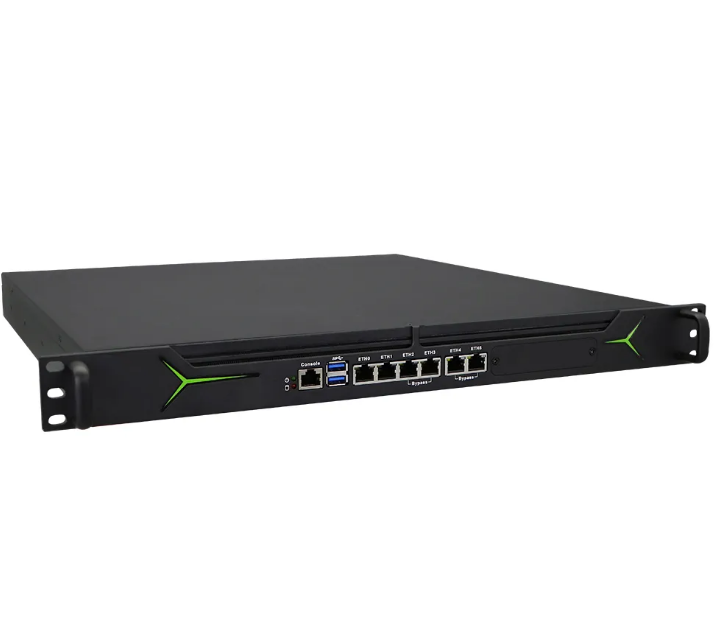
Space Efficiency and Data Center Footprint
Rack Density Metrics: How 1U Rackmount Servers Maximize Floor Space
Rackmount deployments drastically reduce floor space consumption compared to tower alternatives. A standard rack unit (1.75 inches tall) allows up to 42 units in a typical 73-inch cabinet. Each server shares centralized power distribution, network cabling, and cooling infrastructure—enabling high-compute consolidation within a minimized physical footprint. This architecture is engineered specifically for compliance with EIA-310 and ISO/IEC 23918 rack standards.
Tower Server Limitations in Vertical Space
Tower servers occupy floor space as standalone units, requiring clearance for peripherals, airflow pathways, and cable management. At scale, this unstructured layout consumes significantly more real estate than rack-based deployments—and introduces logistical bottlenecks for facility planning, expansion, and maintenance. Rackmount consolidation resolves these constraints by enforcing uniform spacing, airflow control, and service access.
Cooling, Power, and Thermal Management for Enterprise Workloads
Front-to-Rear Airflow in Rackmount Servers vs. Tower’s Radial Cooling Limitations
Rackmount servers use directed front-to-rear airflow—cool air enters through the front, absorbs heat from components, and exits efficiently through rear-mounted fans. This linear path aligns precisely with hot/cold aisle containment strategies, minimizing thermal recirculation and maintaining stable operating temperatures. Tower servers rely on radial cooling—exhausting heat through multiple side and top vents—which disperses warmth unpredictably and draws warmer ambient air instead of targeted cold aisles. As a result, radial cooling reduces cooling effectiveness in dense environments and increases energy demand. According to Data Center Knowledge (2022), data centers using rackmount-optimized airflow achieve 15–28% annual energy savings over tower-based deployments.
PUE Impact: Rack-Optimized Infrastructure Lowers Energy Overhead by 18–22%
The structural and thermal coherence of rackmount deployments directly improves Power Usage Effectiveness (PUE). Consolidated hardware with horizontal airflow synergy reduces facility-level cooling loads and ambient temperature stabilization energy. Industry benchmarks show rack-optimized systems consistently achieve PUE values below 1.25, while mid-sized enterprises using tower configurations average 1.5–1.7. This 18–22% PUE improvement translates into measurable HVAC energy reduction—and enables organizations with 50+ rackmount units to reallocate ~19% of their IT power budget toward core workloads.
Scalability and Serviceability: Rackmount Server Operational Advantages
Hot-Swap Drives, Tool-Less Rails, and Unified Management in Rackmount Ecosystems
Rackmount servers are built for operational agility. Hot-swap drives allow storage replacement without system downtime—boosting service availability in mission-critical environments. Tool-less rails simplify installation and removal, eliminating screws and reducing deployment time. When paired with unified management platforms—such as vendor-agnostic IPMI interfaces or integrated firmware consoles—these features streamline remote power control, firmware updates, and health monitoring. For virtualized infrastructures and high-density compute clusters, this ecosystem cuts Mean Time to Repair (MTTR) by up to 40% and lowers labor costs per node, according to Uptime Institute’s 2023 Infrastructure Operations Report.
Use-Case Alignment: Matching Server Form Factors to Business Needs
Selecting between rackmount and tower servers requires evaluating workload demands, infrastructure maturity, and growth strategy. In centralized data centers, colocation facilities, or cloud-edge hubs with standardized racks and engineered cooling, rackmount servers deliver unmatched density, efficiency, and manageability. Tower servers remain optimal for smaller-scale deployments—such as remote offices, edge locations lacking dedicated HVAC, or specialized workstations where noise, modularity, or physical accessibility outweigh density needs.
The decision hinges on four practical dimensions:
- Space Allocation: 1U–4U rackmount servers conserve 80–90% more floor space per compute node than towers
- Workload Characteristics: Parallel, distributed, or containerized workloads benefit most from rackmount scalability and interconnectivity
- Growth Trajectory: Rack ecosystems support modular, linear scaling—no re-racking or infrastructure overhaul required
- Thermal Constraints: Sites without hot/cold aisle containment or precision cooling often default to tower deployments
Real-world outcomes reflect this alignment: enterprises running web hosting clusters report up to 32% lower operational costs with rack-based infrastructure, while creative studios and design firms favor towers for localized rendering workloads—valuing quieter acoustics, incremental upgrades, and simplified peripheral integration.