 EN
EN

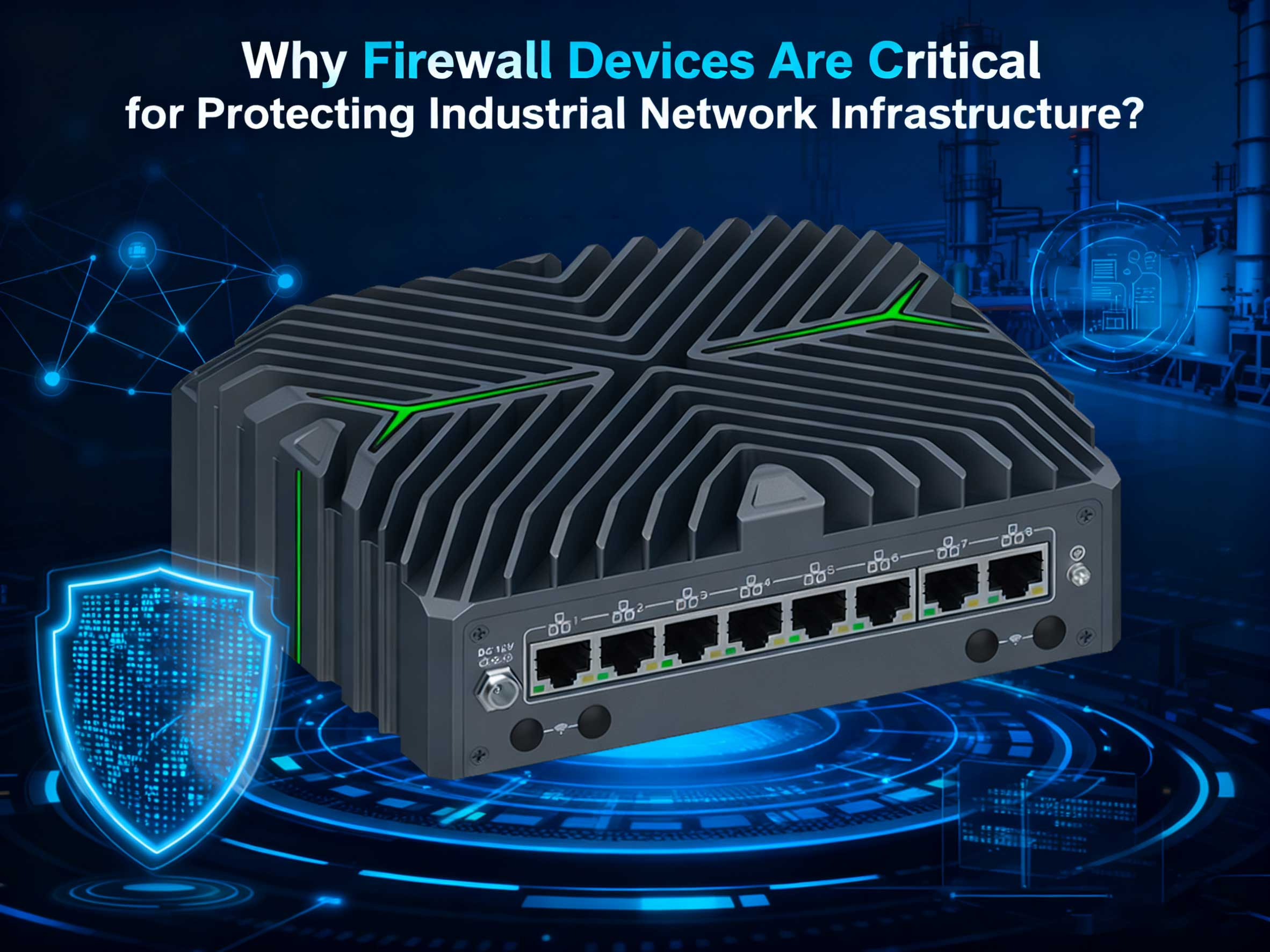
Understanding Industrial Network Security Challenges and the Role of Firewall Devices
Unique vulnerabilities in industrial network infrastructure
Security issues in industrial network setups are quite different compared to what we see in regular IT environments. A lot of older operational tech systems still run on platforms that are way past their prime and can't be updated properly. Meanwhile, industrial control systems tend to focus more on keeping operations running non-stop rather than implementing solid security measures, which naturally creates vulnerabilities. Most industrial networks don't have proper segmentation either, so if something gets in, it can spread across the whole system pretty quickly. A recent industry report from 2023 showed that nearly seven out of ten manufacturing plants had some kind of cyber incident last year, and most of those breaches started right at the network edges where security was weakest. As companies continue merging their IT and operational networks, this only makes things worse for security teams trying to protect against increasingly sophisticated attacks.
How firewall devices enforce defense-in-depth strategies in OT environments
Firewalls play a key role when setting up defense-in-depth approaches for operational technology (OT) systems. They create network zones and control points that manage how different parts of the network communicate while stopping unwanted access to vital equipment. Industrial grade firewalls differ from regular IT versions because they work with specific protocols like Modbus TCP and PROFINET. This means operators can control traffic flows accurately without messing up real time processes that many factories rely on. The whole point of this layered approach is redundancy. If something goes wrong with one layer of protection, there are still other defenses standing. That matters a lot in OT environments where downtime costs money and there aren't always easy alternatives for security measures.
The evolution of cyber threats targeting critical infrastructure
Threats to our critical infrastructure aren't what they used to be anymore. What started as basic disruptions has turned into something much scarier these days - attacks that can actually cause real physical damage. Back in the day, most problems were just about stealing data or knocking things offline for a few hours. Now though, bad guys are going after the actual systems that run our factories, power grids, and water treatment plants. Some state backed hackers throw around specially made malware designed to sneak past all those industrial security measures we thought were so good. Meanwhile, ransomware crews have figured out that hitting energy companies and manufacturers gives them bigger payouts. According to last year's Critical Infrastructure Threat Report, there was almost an 88% jump in attacks aimed right at industrial control systems. That kind of growth means our essential services face dangers getting smarter by the day.
Case study: Power grid attack due to insufficient network segmentation
A major security breach happened in 2022 when hackers got into a regional power grid via an inadequately protected remote monitoring setup. Since there was no firewall separation between regular business networks and the actual control systems, these bad actors were able to move around freely within the network until they reached core grid management functions. The result? Power outages impacting approximately 50 thousand households across the area. Looking back at what went wrong shows clearly that if industrial grade firewalls had been properly implemented to segment different parts of the network, this attack would likely have stayed confined to less important areas without causing such massive problems for consumers. What we learn from this real world example is pretty straightforward: putting firewalls in smart locations acts as crucial protection points that stop unauthorized access spreading throughout essential infrastructure systems.
Industrial Network Segmentation Using Firewall Devices: Zones, Conduits, and Traffic Control
Implementing zones and conduits for secure data flow in ICS networks
When it comes to securing industrial networks, segmentation with firewalls creates those important security lines that stop bad actors from moving freely within OT systems. The IEC 62443 standard gives us this zones and conduits model that basically splits up the network into separate sections. Communication between these sections happens only along specific routes set by policies. By putting high risk parts away from essential control systems, we make sure that if one area gets hacked, the damage doesn't spread everywhere else. These firewalls sit at every network boundary acting like gatekeepers, letting through only what should be allowed while stopping suspicious traffic. This setup builds multiple layers of protection, making it much harder for attackers to get deep into the system.
Stateless vs. stateful filtering in field-level industrial networks
Industrial firewall systems employ various filtering techniques designed specifically for harsh manufacturing settings. The stateless approach looks at each packet separately according to fixed criteria such as IP addresses and port numbers. This method works well in environments where speed matters most, like factory floor networks that need responses within milliseconds. On the flip side, stateful filtering keeps track of ongoing connections and examines the bigger picture of network traffic. This gives administrators smarter control options and catches threats that might slip past basic filters. Of course there's a tradeoff here too. Stateful inspection does improve protection levels but comes with extra processing demands that can slow down critical operations. Most contemporary industrial firewalls actually offer both approaches so companies can adjust their security posture depending on what their particular operations require day to day.
Controlling lateral movement with strategic traffic policies
Firewall devices implement strategic traffic policies that help control how threats move laterally across different parts of industrial networks. These security measures specify precisely what kind of data transfers are allowed between network segments including specific protocols used, where information comes from and goes to, and whether it moves in one direction only. The result is something like digital walls stopping bad actors from getting deeper into the system once they've breached initial defenses. When companies set up detailed access controls at this level, attackers find themselves stuck inside whatever part of the network they initially compromised without being able to reach critical infrastructure elsewhere. Such approaches shrink down the damage caused when breaches do happen while following modern cybersecurity best practices that demand constant verification instead of just trusting whoever happens to be connected somewhere on the network.
Strategic Placement of Firewall Devices Across Industrial Network Layers
Putting firewall devices to work properly means having a multi-layered approach that fits what each part of an industrial network actually needs. Down at the field level, those transparent Layer 2 firewalls are there to shield older OT systems without messing up their timing sensitive communications. These units have to handle pretty rough environments too, surviving things like scorching heat and constant shaking from machinery. When dealing with operations spread across different locations, it makes sense to install smaller firewalls right at remote sites and cell locations. They keep connections safe going back to main networks, which often happens through wireless wide area networks. The big picture stuff matters as well. Strong IP firewalls sit at company borders controlling how data moves between regular computer networks and production floors, making sure only authorized traffic gets through. Getting the balance right is critical because nobody wants security measures slowing down operations or creating situations where one failed component brings everything down.
Next-Generation Firewall Devices and Zero-Trust Integration in IIoT Environments
Enhancing threat detection with next-generation firewall (NGFW) capabilities
Next generation firewalls, or NGFWs as they're commonly called, offer much better threat detection than older models when it comes to protecting today's industrial IoT setups. Traditional firewalls just look at ports and protocols, but NGFWs go way beyond that. They come packed with features like deep packet inspection, intrusion prevention systems, and controls that understand what applications are doing in real time. This helps spot those sneaky threats that try to sneak into industrial networks unnoticed. Security professionals can actually catch and stop these complex attacks before they do damage something that regular firewalls simply miss. The result? Much better protection for things like power grids, manufacturing plants, and other essential systems we rely on every day.
Deep packet inspection for real-time monitoring of control network traffic
Next Generation Firewalls (NGFWs) go beyond traditional approaches by using Deep Packet Inspection or DPI to look at everything inside network packets, not just the header information. This gives them the ability to analyze control network traffic as it happens in real time. With this level of detail, these advanced firewalls can spot strange activity patterns, find hidden malware, and catch unauthorized commands that might signal a security breach. When firewalls actually check out what's flowing through the network, they reveal dangers that simple filters miss completely. For industries running critical operations, this extra layer of defense provided by DPI makes all the difference between catching threats early and dealing with major incidents later on.
Applying zero-trust principles and micro-segmentation using firewall devices
Zero trust security works based on a simple idea nobody gets automatic access rights, whether they're people or machines connected to the network. Instead, everything needs constant checking before being allowed to interact with other parts of the system. Firewalls help implement this approach using something called micro-segmentation. Basically, they split up big industrial networks into smaller, separate zones where only specific communications are permitted between them. What does this achieve? Well, it makes things much harder for hackers because if there's a problem in one section, it stays contained there rather than spreading out to damage other important parts of the infrastructure. The result is significantly improved protection against cyber threats.
Integrating firewall devices into WLANs supporting mobile IIoT assets
Industrial facilities are increasingly turning to wireless local area networks (WLANs) to manage their mobile Industrial Internet of Things (IIoT) equipment like AGVs, handheld scanners, and mobile workstations around the plant floor. When setting up these wireless systems, adding firewall devices isn't just recommended anymore it's practically necessary for proper security. These firewalls act as gatekeepers for all wireless data moving through the network, enforcing security rules consistently whether connections come from wired or wireless sources. The benefit? Plants get solid protection against cyber threats without sacrificing the mobility workers need to move freely throughout manufacturing spaces. Many factories have reported fewer security incidents after implementing this kind of integrated approach.
FAQ
Why are industrial networks more vulnerable to security threats than regular IT networks?
Industrial networks often run on outdated technology that can't be updated properly, prioritize operational continuity over security, and lack proper segmentation, making them susceptible to widespread breaches.
How do firewalls contribute to defense-in-depth strategies in OT environments?
Firewalls create secure network zones and control points for managing communication, allowing specific protocols to work seamlessly without disrupting operations, thus ensuring redundancy in protection layers.
What is the significance of network segmentation in industrial networks?
Network segmentation creates distinct zones and conduits that restrict movement within the network, stopping security breaches from spreading to critical areas and enhancing overall cybersecurity by applying strategic security policies.
How do Next-Generation Firewalls improve threat detection?
Next-Generation Firewalls include advanced features like deep packet inspection and intrusion prevention systems, which offer real-time analysis of network activity to identify and mitigate sophisticated security threats.
Table of Contents
- Understanding Industrial Network Security Challenges and the Role of Firewall Devices
- Industrial Network Segmentation Using Firewall Devices: Zones, Conduits, and Traffic Control
- Strategic Placement of Firewall Devices Across Industrial Network Layers
- Next-Generation Firewall Devices and Zero-Trust Integration in IIoT Environments
-
FAQ
- Why are industrial networks more vulnerable to security threats than regular IT networks?
- How do firewalls contribute to defense-in-depth strategies in OT environments?
- What is the significance of network segmentation in industrial networks?
- How do Next-Generation Firewalls improve threat detection?